 Clear Cortex
UGC video: what makes one work, and three ways to make it
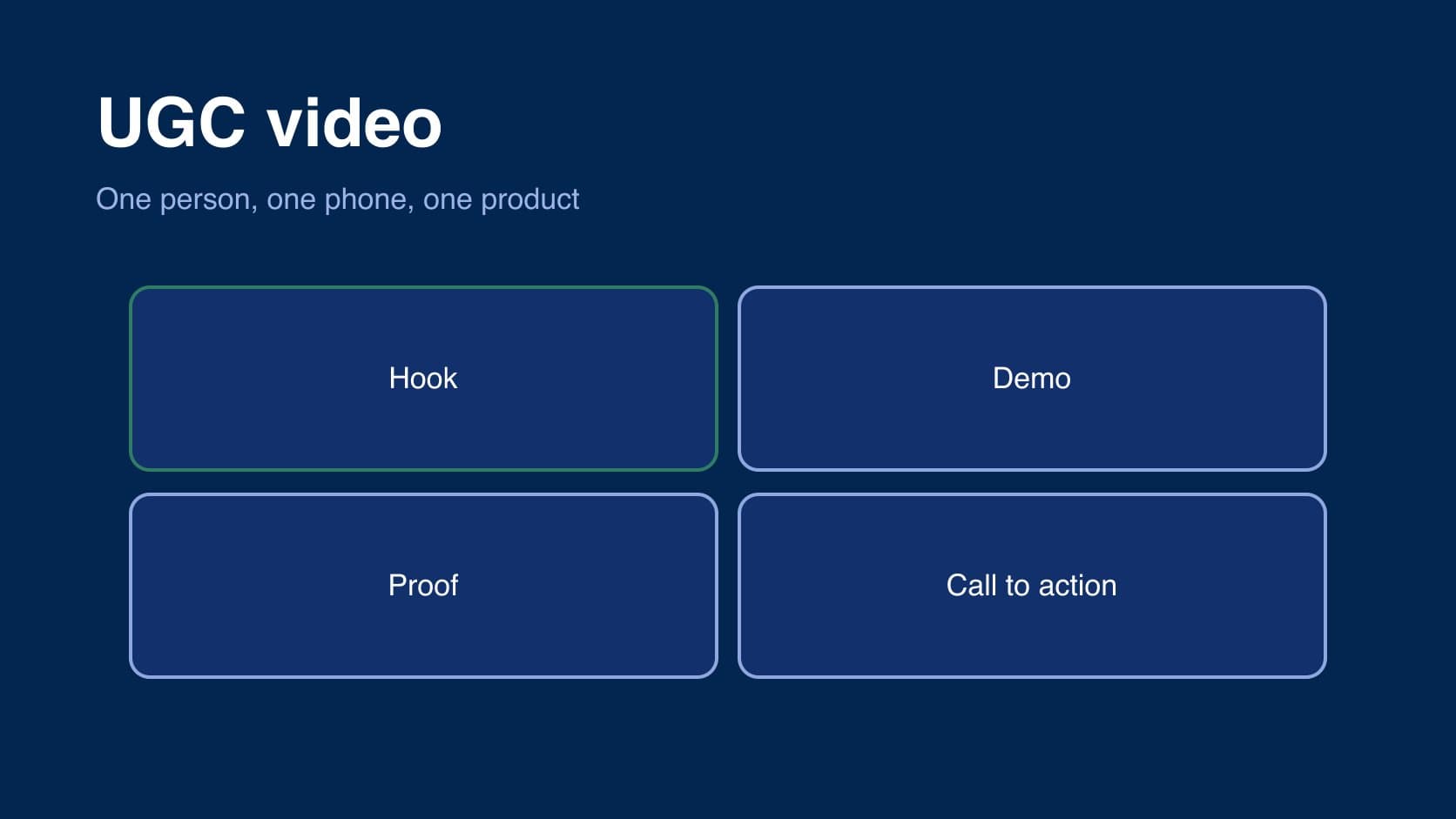
a UGC video is a short vertical clip that looks like it was filmed by an ordinary person on a phone: someone holding the product, using it, and talking to camera. brands use them because they look like the posts around them in the feed, not like an ad. this page covers what goes into one that works, and the three ways to get one made.
for the wider picture of user-generated content, start with what is UGC.
what a UGC video looks like
- vertical, 9:16. made for TikTok, Reels and Shorts first.
- one person, talking to camera, or hands showing the product.
- a real setting: a kitchen, a bathroom, a car. not a studio.
- short. most run well under a minute, and the opening seconds do most of the work.
- captions on, because a lot of people watch with the sound off.
keep text and faces clear of the app's buttons and captions. the layouts are in TikTok safe zones and Instagram safe zones.
the shape that works
- hook: the first line or image that stops the scroll.
- problem: what was annoying before.
- demo: the product in use, close to the lens.
- proof: a result, a reaction, a before and after.
- call to action: where to buy, said plainly.
the hook matters most. a creator who makes AI UGC put it this way:
"The first few seconds of an AI UGC video can make or break an ad."
that is why teams often keep one body and swap the opening. a media buyer asked others how they get volume:
"is your volume driven by iterating on 1 UGC video with 3-4 different hooks?"
hooks, scripts and testing in detail are in UGC ads, and the recurring formats (unboxing, review, problem / solution) in UGC examples.
you need more than one
most UGC videos will not win, and nobody can tell in advance which will. the founder of a UGC marketplace, who disclosed that up front, described what they see:
"the hit rate is roughly one real winner per ten to twelve pieces, and it barely moves with quality."
so plan for a batch, not a single perfect video. that is where cost per video starts to matter, and it is the problem small brands hit first:
"I don't have the budget to run 5 ugc video's from different creators every week because these would drain the low amount of cashflow I have at the moment."
three ways to make a UGC video
hire a creator
the real thing: a person who films your product in their own home. best when the claim needs a believable human behind it. slowest and most expensive per video, and you are buying a licence, so agree where and for how long you can run it. the options for finding one are in UGC platforms.
film it yourself
free apart from time, and the founder is often the most convincing person on camera. it stops working when the audience would not trust you on the subject, or when you need ten variations a week.
generate it with AI
an AI UGC video generator makes the clip from a product photo, an image of a presenter and a short prompt. it is the cheapest way to make many versions, which suits hook and angle tests. watch for the details AI still gets wrong: hands, labels, and the product changing shape between frames. check every clip before it runs, and see AI UGC for what practitioners report.
making one in Clear Cortex
in Marketing Studio, choose the UGC preset, add a product image and a presenter image, and describe the moment in your own words: what they say, where they are, how they react. it makes a vertical 9:16 clip. the review and unboxing presets use the same inputs for those formats. to test hooks, keep the product and presenter and change only the first line of the prompt.
frequently asked questions
what is a UGC video?
a short, phone-style vertical video of a person showing or talking about a product, made to look like an ordinary post rather than an ad.
how long should a UGC video be?
short enough that the point lands in the first few seconds. check each platform's limits in Instagram Reels length and YouTube Shorts size.
can AI make UGC videos?
yes, from a product image and a presenter image. they are best for testing variations quickly; for claims that need a real person behind them, use a creator.
the summary
- vertical, one person, a real setting, captions on.
- hook, problem, demo, proof, call to action.
- make a batch, because most videos lose and you cannot pick the winner in advance.
- creator, yourself or AI: pick by how much trust the claim needs and how many versions you need.
to make one now: UGC video in Clear Cortex.