 Clear Cortex
UGC ads: hooks, scripts, testing and usage rights
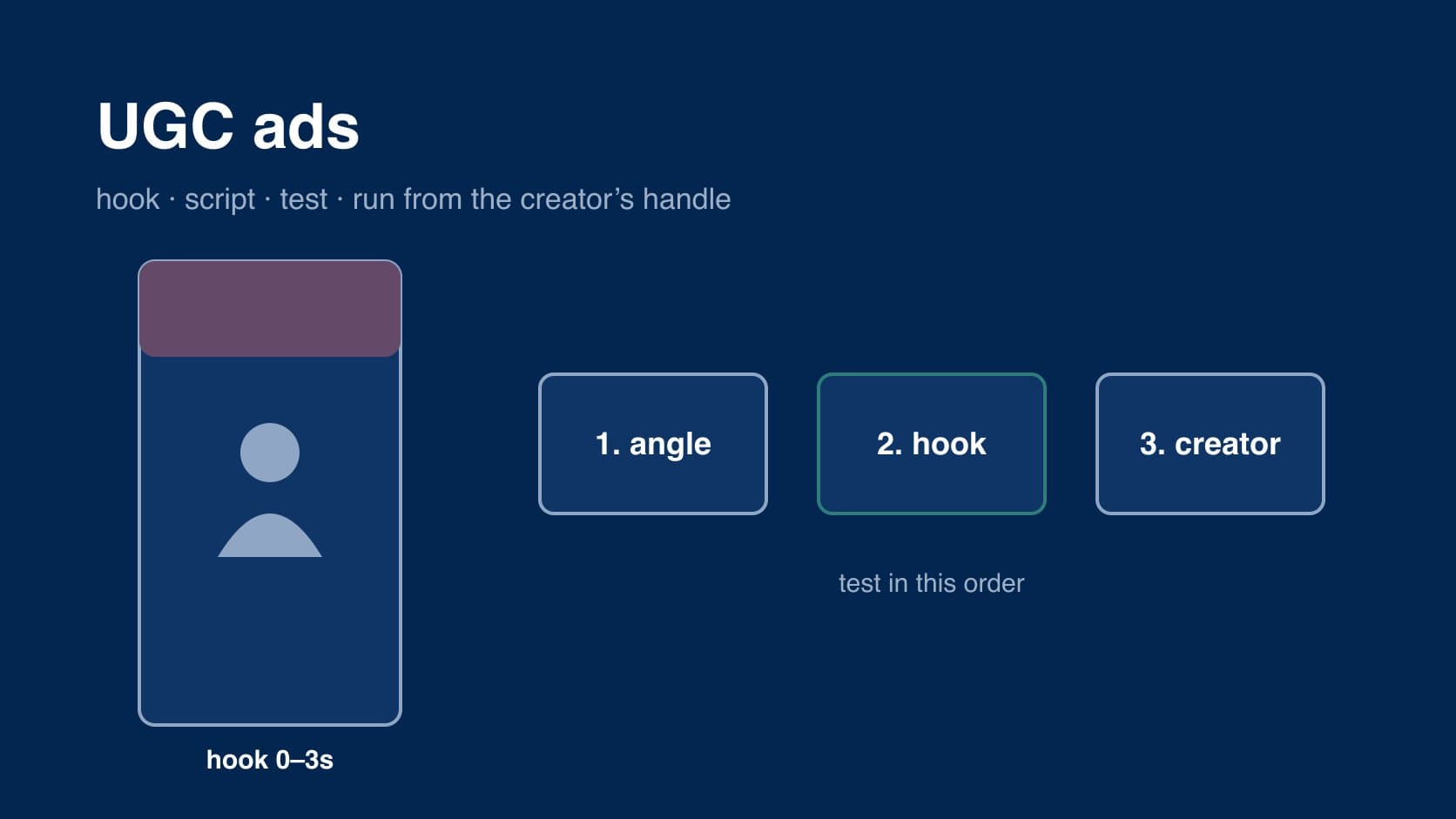
UGC ads are paid ads made from user-generated content: usually a creator's phone video, run through TikTok, Meta or YouTube ad accounts instead of being left as an organic post. they are the default creative for a lot of ecommerce and app advertisers now, because they look like the feed they run in.
this guide covers running them: the hook, the script, how to test, running ads from a creator's account (Spark Ads, partnership ads, whitelisting), and the usage rights you need first. for what UGC is in the first place, see what is UGC.
why UGC works as an ad
a UGC ad is still an ad. it carries the "Sponsored" label and a call-to-action button. what it changes is the first second: a face talking to the camera gets a moment of attention that a product shot usually doesn't. the general rules of ad creative still apply. UGC is a style of making one, not a substitute for the idea.
the corollary is that a UGC ad with a weak hook fails like any other ad. from someone who has run dozens of AI video ads and compared them with human UGC:
"I have also had polished human ugc completely flop because the hook was weak and the viewer was gone before anything meaningful happened."
the hook
the first two seconds decide whether anyone sees the rest. hooks that keep working in UGC:
- the verdict first. "I've stopped buying [the usual thing]." the reason comes after.
- the problem on screen. show the mess, the stain, the frizz before saying a word.
- the result first. the "after", then how it happened.
- a callout. "if you run every morning…" names the viewer so they stop.
- a contradiction. "everyone says X. I did the opposite."
put the hook in the on-screen text as well as the voice. a lot of people watch on mute, and text that sits where TikTok's caption and buttons cover it is wasted. the pixel margins are in TikTok safe zones.
scripting a UGC ad
a UGC ad has a script even when it looks unscripted. a structure that fits most 20–40 second ads:
- hook (0–3s). one of the above.
- problem (3–8s). the situation the viewer is in, in their words.
- product doing the work (8–20s). on camera, at real size, used for the job.
- proof (20–30s). the result, a number, a before-and-after, or one honest downside.
- call to action (last 3–5s). what to do and why now.
write it as bullet points the creator says in their own words, not lines to read. a word-for-word script is what produces the "actor reading an ad" look that defeats the point. the formats this structure plugs into, such as unboxing, review and problem / solution, are laid out in UGC examples.
testing
UGC is cheap per video, and the whole point of that is volume. the most common mistake is buying too few to learn anything:
"Everyone saves up, hires a UGC creator, gets 4 videos back, runs them, and learns basically nothing, because 4 assets is not a test."
a sensible order:
- test angles first. different problems, different buyers, different formats. these are the big differences.
- then hooks inside the winning angle. same body, new first three seconds. this is the cheapest variant you can make. as one buyer put it:
"Try running 3 different hooks against the same product footage — cheapest way to find what the algorithm rewards."
- then creators. the same script with a different person often performs very differently. that is worth knowing before you build a campaign around one face.
ask for hook variants and raw footage in the brief, not just one finished edit. with raw clips you can cut new hooks yourself without paying for a reshoot.
expect winners to wear out. a strong UGC ad can run for months and then stop, and a fresh video from the same creator does not always bring it back:
"New UGC ad from the same creator that used to crush it, performance never came back the same."
and give tests enough spend to mean something. a fragrance brand that had just launched its first Spark Ads asked the right question about its own result:
"Is 4 creatives / $400 just way too little data to judge anything?"
how many creatives you actually need, and how to judge a test, is covered in the ad creative guide.
running ads from the creator's account
a UGC video can run from your brand's account like any other ad, or from the creator's own account, with their name and photo at the top. the second option, widely called whitelisting, usually looks more native, and each platform has its own way of doing it. checked November 2026:
TikTok Spark Ads
TikTok describes Spark Ads as a native ad format that lets you use organic TikTok posts in your advertising, either your own or, with authorization, another creator's. the creator generates an authorization code for a post in the TikTok app (the three dots on the video, then Ad settings, then Generate) and sends it to the brand, which applies it in Ads Manager. TikTok says the duration of the authorization can be set to fit the campaign. the ad's display name and text come from the original post and can't be edited, and engagement on the ad counts towards the original post.
because a Spark Ad takes the post's caption and adds the ad's button and label, a post laid out for organic can end up with the call to action over its text. see the Spark Ads section of TikTok safe zones.
Meta partnership ads
Meta's partnership ads run Facebook and Instagram ads from a creator's or partner's handle. the creator approves it in one of two ways. they can accept an account-level permission request in the Instagram app, which lets the brand create partnership ads from their handle without them posting anything first. or the brand can make ads from the creator's existing posts that tag it. the brand can also revoke permissions, and the API reports each creator's status, such as pending or revoked. formats and sizes for each placement are in Meta ad specs.
what to agree before you ask
platform permission and the commercial deal are different things. a creator tapping "accept" lets the ad run. it does not say how long you may run it or what you owe for it. put that in writing first.
usage rights and licensing
usage rights are what you are allowed to do with the content after it is delivered. the terms that change the price:
- organic or paid. reposting on your own accounts is the cheapest. running it behind ad spend costs more.
- the window. 30 days, 90 days, a year or perpetual. perpetual paid usage is the most expensive.
- whose account. running from the creator's handle (Spark Ads, partnership ads) is usually priced on top.
- exclusivity. stopping the creator working with competitors for a period costs extra, and should name the competitors.
- raw footage and edits. whether you get the raw clips to recut is a separate line.
a contract reviewer who works for creators posted the uplifts they see. they are one person's figures, but useful as a starting point for a budget:
"paid usage with no end date (perpetual) should cost a lot more, think 2.5x to 4x your base fee."
"whitelisting (ads through your handle) is +30 to 100%."
the same reviewer's advice to creators is worth hearing from the brand side, because it explains why a vague contract tends to cost more later:
"if the contract doesn't name a window, that is not an accident."
name the window, the placements and the accounts in writing, and keep a record of when each licence ends. an ad still running after its licence has expired is the most common way this goes wrong.
disclosure
a UGC ad running from your own account already carries the platform's "Sponsored" label. the harder case is content that looks organic: a creator's post that you paid for, or that is running from their handle. checked November 2026: the ASA and CMA's influencers' guide (October 2026) says paid or gifted content needs a clear, upfront label such as "#Ad", and that a platform's own branded-content tool may be enough only if it is upfront and prominent. the FTC's Disclosures 101 says the disclosure should be in the video itself, not just the description. brand, creator and agency are all responsible in the UK guide. more in what is UGC.
the summary
- a UGC ad is still an ad. the style buys a second of attention; the hook and the idea do the rest.
- brief bullet points, not lines, and ask for hook variants and raw footage.
- test angles, then hooks, then creators, and buy enough videos for the test to mean something.
- Spark Ads and partnership ads run from the creator's handle, with permission the creator grants in the app.
- platform permission is not a licence. agree paid usage, window, handle and exclusivity in writing.
back to the overview: what is UGC. for where the videos come from, see how to get UGC. if you are making the test variants in Clear Cortex, the Marketing Studio's UGC, review and unboxing presets turn a product image and a presenter image into a vertical video, so a new hook does not need a new shoot: UGC ads in Clear Cortex.