 Clear Cortex
UGC platforms: the three kinds, and how to pick one
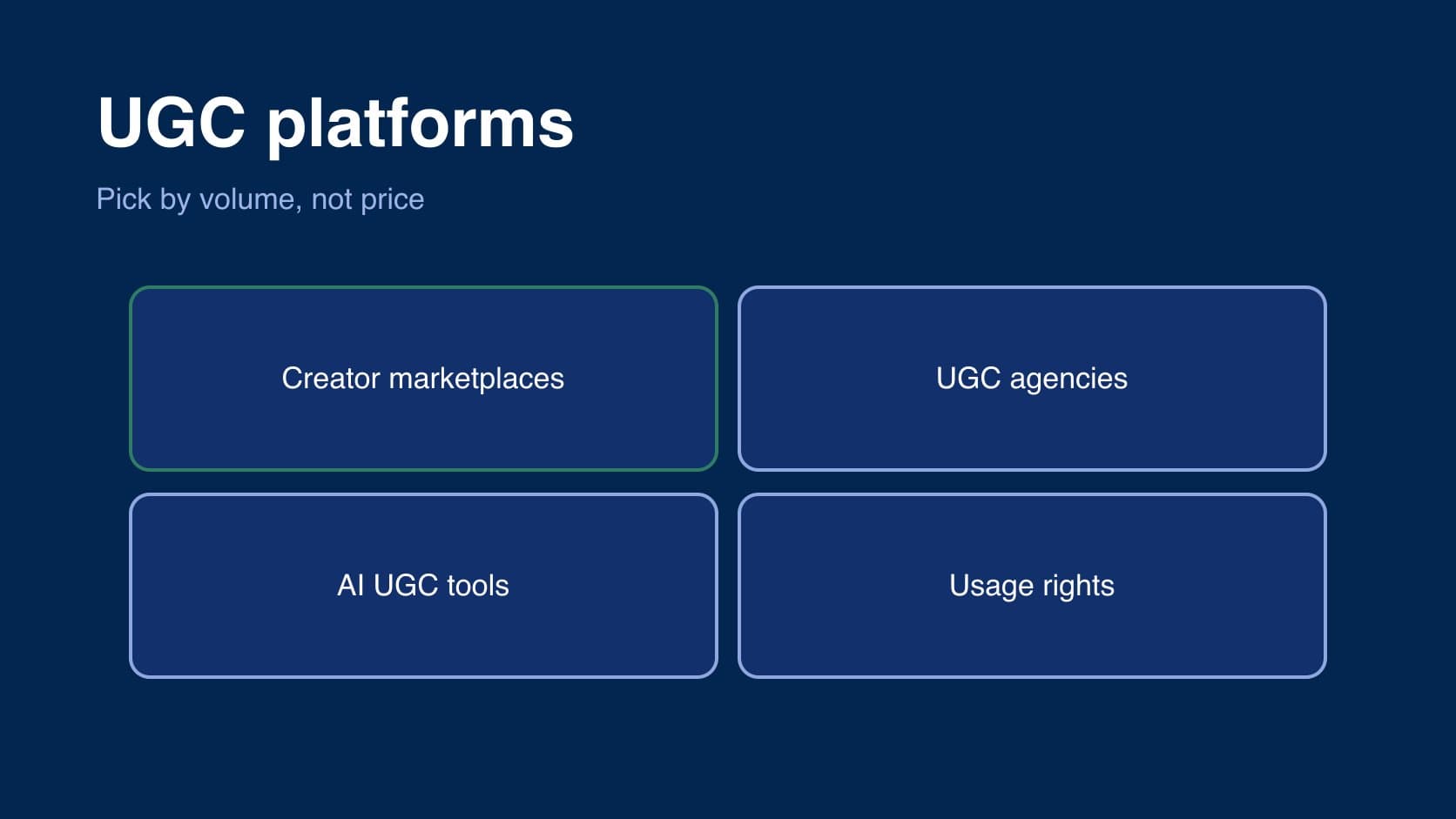
"UGC platform" covers three different kinds of business. some connect you with creators who film your product. some are agencies that do the finding, briefing and editing for you. and some are AI tools that make a creator-style video from a product image, with no creator involved. they solve the same problem at very different prices, so the first job is knowing which kind you are looking at.
if you want the definition of UGC itself first, start with what is UGC.
the three kinds of UGC platform
creator marketplaces
self-serve sites such as Billo, Insense and TikTok Creator Marketplace. you post a brief, creators apply, you pick one, send the product and pay per video. you write the brief and approve the work yourself.
UGC agencies
a monthly retainer for a set number of videos. the agency finds creators, writes scripts, manages revisions and edits. more on how they price and when they make sense in UGC agency.
AI UGC tools
apps that generate a person talking about or holding your product from a product photo and a short prompt. no shipping, no waiting on a creator, and a new version takes minutes. what they are good and bad at is covered in AI UGC.
what a marketplace is really selling
a paid social lead for a skincare brand tested four creator platforms over six months and 31 briefs. their conclusion was that the listing page is the easy part:
"the 'marketplace' part is a UI. the quality is the vetting."
"on the big self-serve platforms you get 40-60 applicants per brief and maybe 4 have actually shot a converting ad in your category before."
and the number to budget on is not the price per video on the pricing page, but the price per video you can actually run:
"avg cost per USABLE asset (not delivered, usable in ads): $187"
those are one team's figures from one category, but the point travels: compare platforms on usable videos, ghosting and revision rounds, not the headline rate.
when an agency makes sense
agencies earn their fee when there is enough volume to keep a strategist, editor and project manager busy. a founder running paid social at about $40k a month in revenue took four agency calls and did the maths:
"$600 to $766 per ad. for ugc. that a creator filmed on an iphone 13 in their kitchen."
"agencies are built for brands spending $15k+/mo on creative because that is the volume where the account manager, strategist, editor, and project manager are all justified by the retainer."
below that volume, going direct through a marketplace, or making the test variants yourself, usually costs less per video.
where AI UGC tools fit
AI tools are cheapest per attempt, which matters because most ads lose. they are strongest for testing hooks and angles quickly, and for brands that cannot yet afford a creator every week. they are weakest where trust depends on a real person: skincare results, a fitness claim, anything the viewer would want a real customer to vouch for. a brand selling a $400–600 electric product put the risk plainly:
"the output still looks pretty fake and polished in a way that feels off. Customers can tell."
a common split is to test angles with AI versions, then pay a creator to film the winner.
usage rights, whichever you choose
with creator videos, what you are buying is a licence, and the terms differ by platform and by creator. one brand working with around 14 creators described what happens when nobody tracks the end dates:
"ad kept running for 3 weeks past the window. she dm'd us asking for back-payment + a renewal fee. legal said pay it. paid $1200."
before you sign up, check the platform's default terms: how long you can run the video as a paid ad, on which channels, whether you can edit it, and whether it can run from the creator's handle. the details are in UGC ads.
how to choose
- a few videos a month, small budget: an AI tool for test variants, a marketplace for the one you want filmed for real.
- around ten a month, someone in-house to brief: a creator marketplace, judged on usable videos per brief.
- twenty or more a month, no time to manage it: an agency, with the rights terms written into the contract.
- selling in the UK: check the platform has creators in the UK and that the default licence covers the channels you will run on.
frequently asked questions
what is a UGC platform?
a service that gets you user-generated-style content for your brand: by matching you with creators, by managing creators for you, or by generating the video with AI.
what is the best UGC platform?
the one whose model fits your volume. compare on cost per usable video, how many applicants per brief are any good, and the default usage rights, not on the price per video.
are UGC apps worth it?
for testing hooks and angles at volume, usually yes. for claims that need a real person behind them, pay a creator.
the summary
- three kinds: creator marketplaces, agencies and AI tools.
- marketplaces sell vetting, so judge them on cost per usable video.
- agencies pay off at volume, roughly when there is enough work to keep a team busy.
- AI tools are cheapest per attempt, best for testing, weakest where trust needs a real person.
- rights are a licence: know the window, the channels and the end date.
for where the videos go once you have them, see UGC marketing. to try the AI route, Clear Cortex's Marketing Studio has UGC, review and unboxing presets that turn a product image and a presenter image into a vertical clip: AI UGC in Clear Cortex.