 Clear Cortex
Digital marketing for e-commerce: every channel, and what each one needs
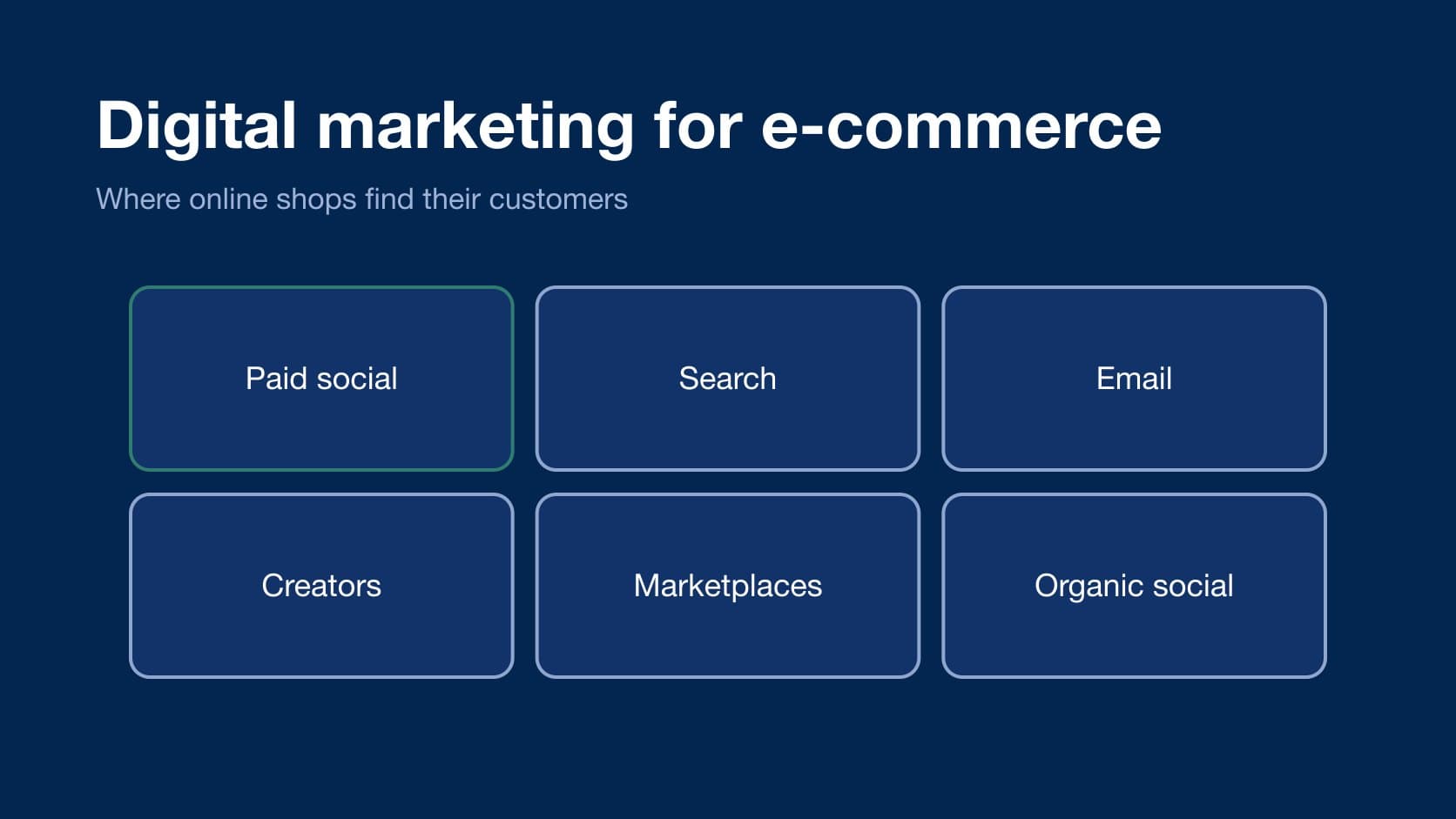
digital marketing for e-commerce is the set of online channels a shop uses to find customers and sell to them again: paid social, search, email, creators, marketplaces and organic social. each one works differently, costs differently and needs different creative. this guide goes through them one at a time.
paid social
ads on Meta (Facebook and Instagram), TikTok and Pinterest. the fastest way to put a new product in front of people who have never heard of you, and the fastest way to find out whether it sells.
what it needs: lots of creative. short vertical video, product photos in real settings, and many variations, because each ad wears out. the platform's algorithm decides who sees it; your job is mostly to feed it ads worth showing. sizes and safe zones are in Meta ad specs and TikTok safe zones.
search
Google Shopping and search ads catch people already looking for what you sell. organic search — product pages and guides that rank — is slower to build but costs nothing per click once it works.
what it needs: clear product titles, good product photos for the Shopping feed, and pages that answer what buyers search for.
email and SMS
selling to people who have already bought, or signed up. abandoned basket reminders, new products, restocks.
what it needs: a list, which starts with a sign-up form on day one, and a steady supply of images for each send.
creators
people with an audience showing your product to it — paid posts, gifted products, or creators making UGC-style videos for you to run as ads.
what it needs: a clear brief, usage rights for the content, and patience. more in UGC ads.
marketplaces
Amazon, eBay and Etsy bring the shoppers; you pay fees and compete in the same results as everyone else. most marketplaces also sell ads inside their own search.
what it needs: a main image that wins the click, then photos that answer questions before they're asked.
organic social
your own posts on Instagram, TikTok and the rest. slow, free, and good for showing the brand behind the products.
what it needs: regular posts, which in practice means a lot of images and short clips.
the thread through all of them
every channel above runs on product images and short videos, and the paid ones burn through them. that is the part small shops find hardest to keep up with. a seller explained what they ended up doing:
"enough “good enough” creatives to keep testing without waiting on a studio every time"
the usual answer now is to make test creative cheaply — often with AI image and video models — and pay for a proper shoot only for what wins. where that works and where it doesn't is in AI dropshipping.
frequently asked questions
which digital marketing channel is best for e-commerce?
for testing a new product, paid social. for the cheapest repeat sales, email. most shops need both, then add search as it builds.
how much should a small shop spend on digital marketing?
there's no fixed share. work out what you can pay to win a customer and still make money, and spend up to that on whatever channel is winning them.
the summary
- channels: paid social, search, email, creators, marketplaces, organic social.
- the common need: product images and short video, and plenty of them.
the overview is in e-commerce marketing. Clear Cortex makes product shots and UGC-style video ads from a product photo, in Marketing Studio.