 Clear Cortex
E-commerce marketing: the channels, and the creative they all run on
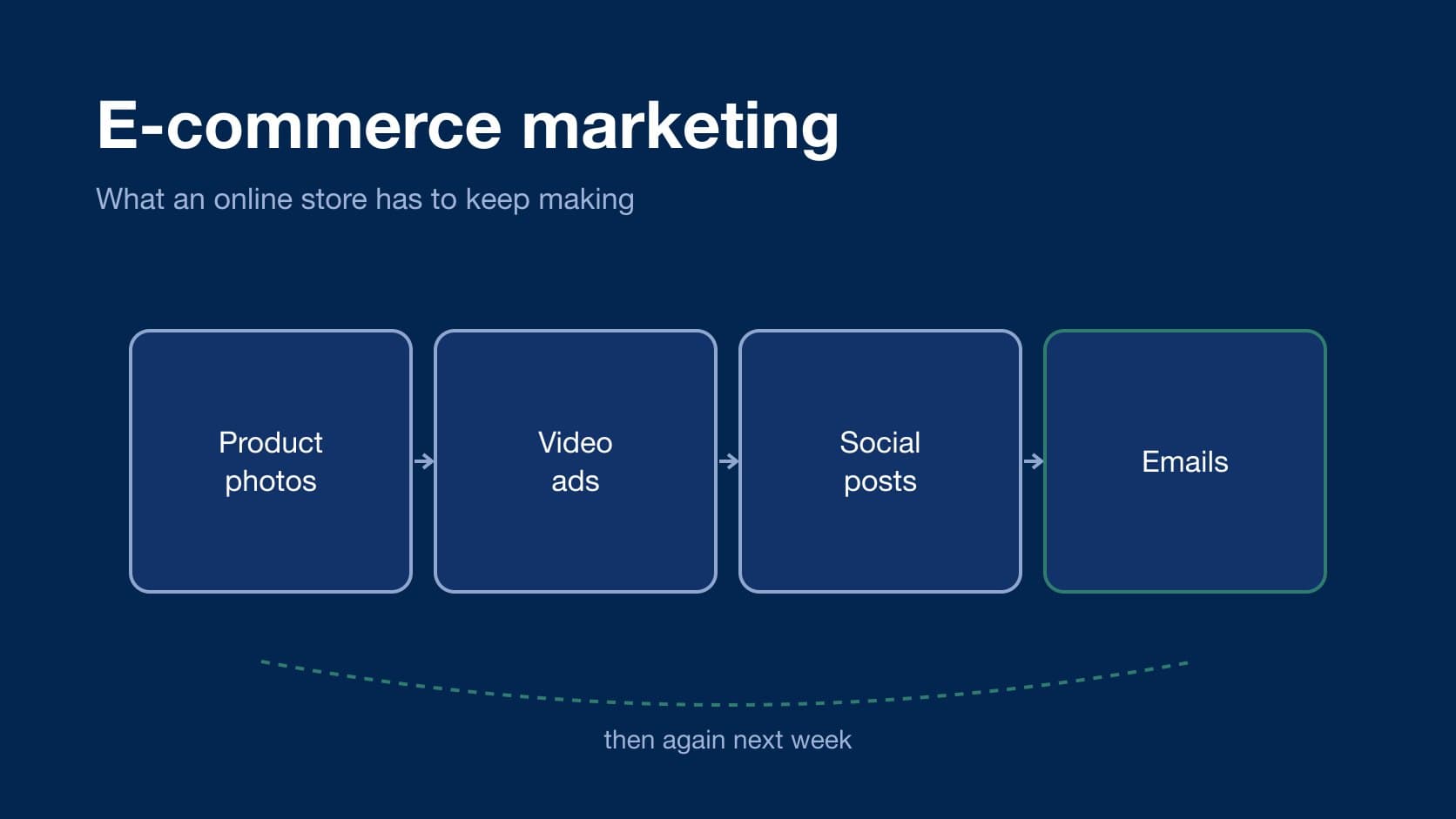
e-commerce marketing is everything an online shop does to get people to its products and get them to buy: ads, search, email, social posts, creators and marketplaces. the channels get the attention, but the part that decides whether any of them work is the material you put into them — the photos, the videos and the words.
this page is the map. each section gives the short answer and links to a guide that goes deeper.
what e-commerce marketing covers
- paid ads: Meta, TikTok, Google and Pinterest. you pay to put a product in front of people who haven't heard of you.
- search: product pages and guides that rank when someone searches for what you sell.
- email and SMS: selling again to people who already bought or signed up. usually the cheapest sale you make.
- social and creators: your own posts, and people with an audience showing your product to theirs.
- marketplaces: Amazon, eBay and Etsy, where the traffic already exists and you compete for it.
which channels suit which shop is in digital marketing for e-commerce.
the part that never stops: creative
every channel above runs on the same raw material. a product photo goes on the listing, in the ad, in the email and on the social post. a short video does the same job on TikTok, Reels and Meta. and ads wear out: the same image shown to the same people stops working, so a shop that advertises needs new creative all the time, not once.
store owners say this more than anything else about marketing. one, running a profitable shop with a partner:
"every month I've been profitable, but I am struggling with creative creation."
another, on why old ads stop working:
"clearing this debt requires a massive influx of new ideas that we just don't have."
what a shop has to make
- product photos: a clean shot on white for the listing, lifestyle shots that show it in use, close-ups of the detail people ask about.
- video ads: short vertical clips, often in the style of a customer filming it themselves (UGC), with the hook in the first two seconds.
- variations: the same product in several angles, hooks and settings, so you can test which one sells before spending more.
- words: product descriptions, ad text, subject lines.
a seller on why flat product photos aren't enough on their own:
"Flat lays are easier to produce, but usually underperform in ads."
how AI fits in
AI image and video models change the cost of the making, not the thinking. from one clean product photo you can get lifestyle scenes, an on-model shot or a UGC-style clip in minutes, which makes it cheap to try ten angles and only pay for a real shoot on the one that works. what it does not do is pick the product, the offer or the audience, and every image still has to show the product that actually arrives.
the honest map of where AI helps a shop and where it doesn't is in AI dropshipping — written for dropshippers, true for any online store.
where to start
- new to it? start with what is an e-commerce business.
- running a shop already? running an e-commerce business covers the jobs, and where the time goes.
- want ideas? e-commerce examples covers the main ways online shops sell.
frequently asked questions
what is e-commerce marketing?
the work of getting people to an online shop and getting them to buy: ads, search, email, social, creators and marketplaces, plus the photos, videos and copy those channels run on.
which channel is best for a new shop?
there isn't one answer. paid social is the fastest way to test whether a product sells; search and email build up slower but cost less per sale once they work. most shops start with one paid channel and add email straight away.
how often do ads need new creative?
when results drop with nothing else changed, the ad has usually worn out. shops that advertise heavily tend to add new creative every week or two.
the summary
- what: getting people to an online shop and getting them to buy.
- channels: paid ads, search, email, social and creators, marketplaces.
- the bottleneck: creative, because every channel needs it and ads wear it out.
- AI: makes the photos and clips cheaper to make and test; the decisions stay yours.
Clear Cortex makes product shots, lifestyle scenes and UGC-style video ads from a product photo, in Marketing Studio, and keeps everything you make in one library.