 Clear Cortex
What is a UGC creator? A guide for brands hiring one
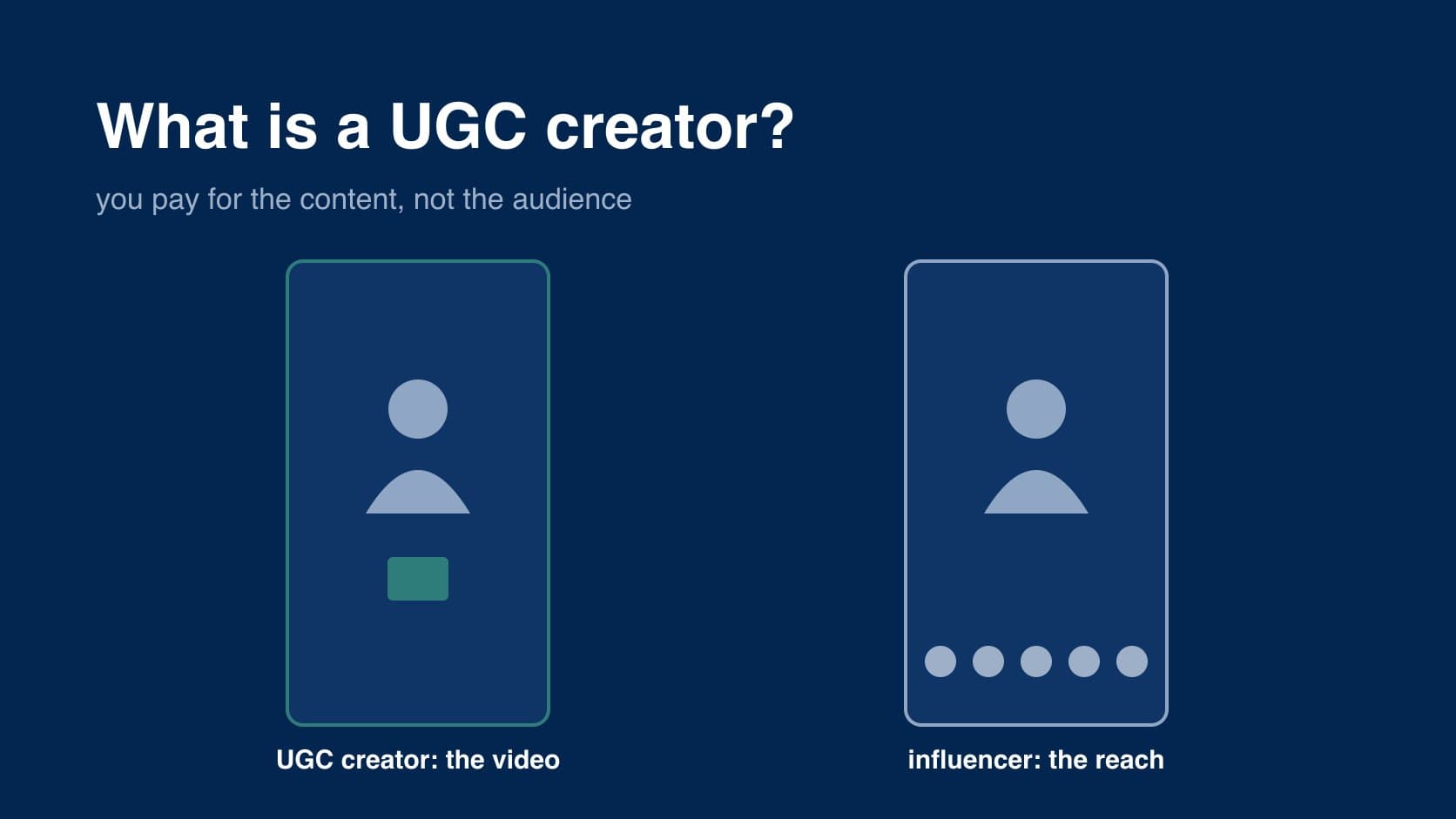
a UGC creator is someone a brand pays to make videos and photos in the style of user-generated content: a person talking to camera about a product, filmed on a phone, as if they were a customer. the brand gets the files and usually runs them as ads or posts them on its own accounts. the creator often doesn't post them at all.
this guide is for the brand side: what a UGC creator does, how they differ from an influencer, what you typically get, and how to find and brief one. for the term itself, see what is UGC.
what a UGC creator does
the job is closer to an actor-producer than to an influencer. a typical project:
- gets a brief and the product (posted out, or an app login).
- plans the shots and writes, or adapts, the script.
- films it themselves, usually at home on a phone, presenting to camera.
- delivers raw clips, an edit, or both, plus any agreed hook variants.
- does a round of revisions.
what you are paying for is performance on camera and the ability to make a product look used, not staged. one marketer, writing about what is replacing paid influencer posts, described the category in a line:
"Not influencers, just people who make good content for a flat fee."
UGC creator vs influencer
| UGC creator | influencer | |
|---|---|---|
| what you pay for | the content | the audience |
| who posts it | usually the brand, often as an ad | the influencer, on their own account |
| follower count | mostly irrelevant | the main thing priced |
| how it is priced | per video, plus usage rights | per post, by reach |
| how it is judged | ad results: hook rate, cost per purchase | reach, engagement, sales from their audience |
the lines blur. some influencers also sell UGC, and some UGC creators build audiences. but mixing the two up is expensive. one advertiser described hiring a fitness creator with a large following to promote a pre-workout:
"What we got back was 6 posts where she basically used our product as a prop while the whole video was about her splits and her morning skin routine, like we'd paid her to document her own lifestyle with our logo in frame."
"She built an audience around herself, and we were dumb enough to assume that translated to moving product."
that is an influencer doing an influencer's job. a UGC brief asks for the opposite: the product is the subject and the person is the delivery.
typical deliverables
- short vertical videos, usually 15–60 seconds, in a format such as unboxing, review, problem / solution or demo (UGC examples lays them out).
- hook variants: the same video with different opening lines.
- raw footage, so your editor can recut it.
- photos of the product in use, for ads and product pages.
- usage rights for an agreed period and set of placements, priced separately. see UGC ads.
- optionally, posting or whitelisting: running ads from the creator's own account, priced on top.
get each of these written into the agreement. a founder new to hiring asked the question every brand should ask before the first quote:
"Do you usually charge more for things like usage rights, multiple hooks, or raw footage?"
the answer is usually yes, for all three.
what UGC creators cost
there is no standard rate, and that is the most consistent finding. buyers who have tried to standardise it report wide spreads for the same job. one beauty brand's paid social lead sent one brief to a set of creators:
"same brief, same brand, same product, sent to 14 creators: 15s tiktok native quotes came back $180 to $650."
other buyers on the same forums report paying anywhere from $60–120 a video on a freelance marketplace to $150–400 going direct. what pushes the price up: longer videos, paid usage, longer licence windows, whitelisting, exclusivity, raw footage and experience in your category. the honest way to budget is per usable video, not per delivered video, because some will not be good enough to run.
how brands find UGC creators
- direct outreach on TikTok and Instagram, to people already making the kind of video you want.
- inbound. once a brand is visible, creators pitch it, often daily.
- UGC platforms and marketplaces, where you post a brief and creators apply.
- UGC agencies, which source, brief and edit for you.
- your own customers, some of whom are better on camera than any hire.
the costs and trade-offs of each route are compared in how to get UGC.
vetting
whichever route, the work is in the vetting. a portfolio of nice-looking videos tells you little; ads that performed tell you a lot. one buyer, after months on self-serve platforms:
"on the big self-serve platforms you get 40-60 applicants per brief and maybe 4 have actually shot a converting ad in your category before."
what to look at: the first two seconds of their last few brand videos (is there a hook?), whether they have shot your category before, how natural they are delivering a line, and whether they turned work round when they said they would. a short paid test video before a bigger batch is worth the cost.
how to brief a UGC creator
the most common complaint from brands is not finding creators. it is that the first batch comes back off-brand. from someone running a UGC programme:
"The content is technically fine but it doesn't feel like us."
a brief that prevents most of that fits on one page:
- who it is for and the one problem the product solves for them.
- the format (review, unboxing, problem / solution…) and the length.
- the hook, or two or three to choose from, written out.
- talking points, not a script. what must be said, in bullets, to say in their own words.
- the shot that must be in it: the product doing the one thing that matters.
- what not to say: claims you cannot back up, especially for health and beauty products.
- technical: 9:16, natural light, no music (you add it), captions or not, file names.
- examples of videos you like, with what you like about each.
- the deal: deliverables, revisions, usage rights, deadline, and the "#Ad" label if they post it.
and send performance back afterwards. a creator who knows which of their hooks won writes better ones next time.
the summary
- a UGC creator makes customer-style content for a fee. you pay for the content, not their audience.
- an influencer sells reach. a UGC creator sells performance on camera. brief accordingly.
- deliverables beyond the video, such as hooks, raw footage and usage rights, are usually priced separately. agree them upfront.
- rates vary widely for the same job. budget per usable video.
- vet on past ads and brief on one page. talking points, not a script.
for the bigger picture, go back to what is UGC. if you want to test angles before booking creators, the AI route is covered in AI UGC.