 Clear Cortex
UGC marketing: where it goes, and how a UGC campaign runs
UGC marketing means using content that looks like it came from customers rather than the brand: reviews, unboxings, people using the product on camera. some of it is posted by real customers for free. most of what runs in ads is commissioned from creators, or now generated with AI. this page covers where it goes, how a UGC campaign runs, and how to tell whether it is working.
the definitions and the rules on labelling are in what is UGC.
organic and paid UGC
organic
real customers posting on their own: tagged photos, reviews, comments. it is free and the most believable, but you cannot order it, and you need the person's permission before you reuse it.
paid
creators paid to make content in the same style. you control the brief and the volume, and you buy a licence to run it. this is what most "UGC" in ads actually is.
AI-generated
the same style made by an image or video model from a product photo. cheapest per version, best for testing. more in AI UGC.
where UGC goes
- paid social: TikTok, Reels and Facebook ads, where it does most of its work. see UGC ads.
- product pages: customer photos and short videos next to the buy button.
- organic social: reposted customer content, with permission.
- email: a real customer's photo or quote in place of a studio shot.
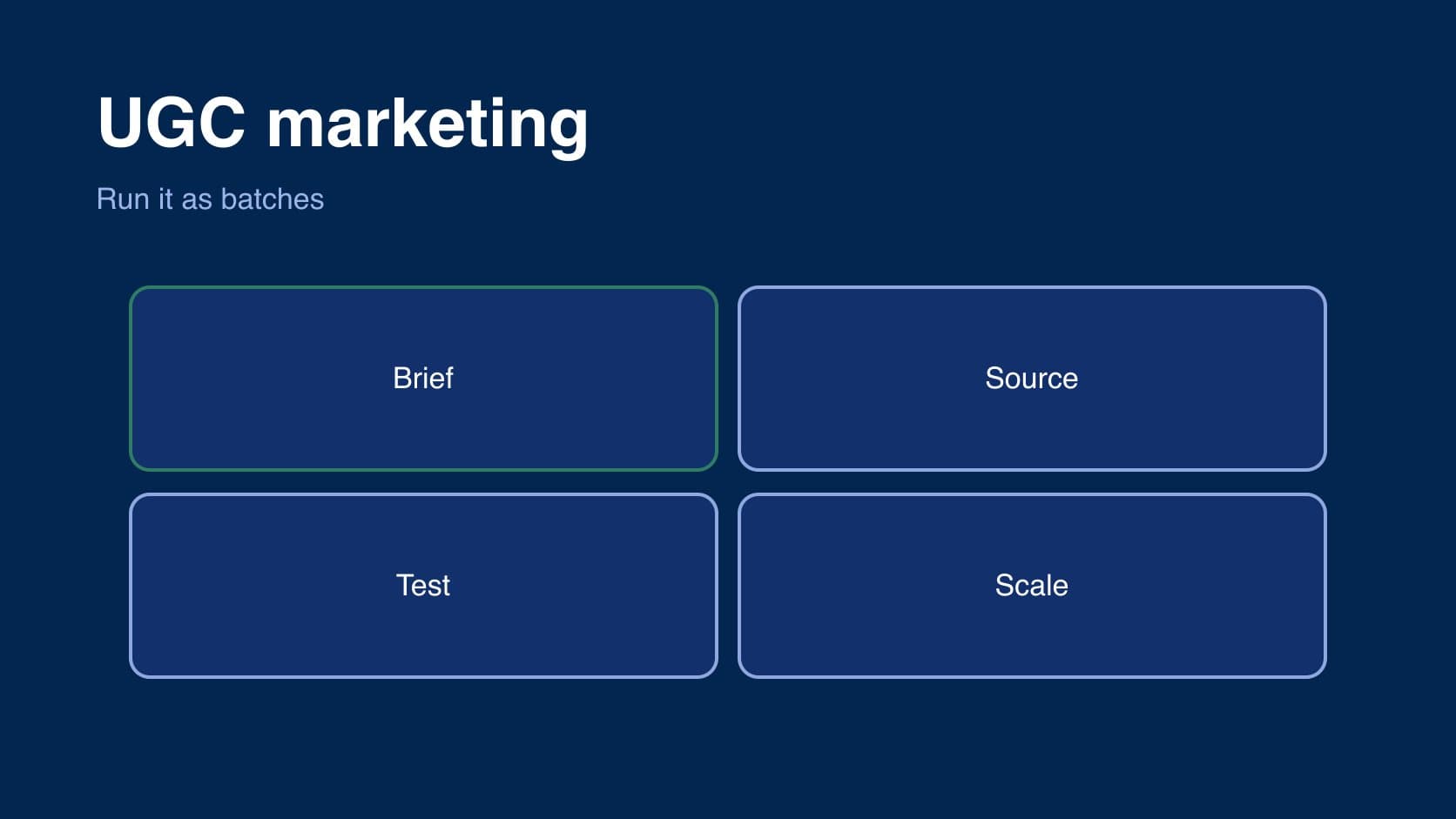
how a UGC campaign runs
- brief. one product, one buyer, one problem. give the creator bullet points, not a script.
- source. creators through a marketplace or agency, your own customers, or AI versions. the options are compared in UGC platforms.
- test. run several videos against each other with a small budget each.
- scale. move spend to the winners, and make new versions of them before they wear out.
- repeat. the next batch starts before the current winners fade.
the brands that keep growing treat the batch as the unit, not the single video. the founder of a UGC marketplace, who said so up front, described the difference:
"The stalled ones buy two or three expensive videos, watch them fatigue, then go quiet for a month. The growing ones treat creative like inventory, always a next batch, always a test running, winners get the spend, losers get killed without a meeting."
pick creators for conversion, not followers
a big following is not the same as a video that sells. a supplement brand learned that after paying a fitness creator with 212K followers:
"we'd paid her to document her own lifestyle with our logo in frame. ROAS came back at 0.7."
for paid UGC, judge creators on whether they have made ads that sold in your category, and on how clearly the product is shown, not on audience size.
how to tell if it is working
- hook rate: the share of viewers still watching after the first few seconds.
- cost per usable video: what you paid divided by the videos good enough to run.
- cost per acquisition: the number that pays the bills.
cheapest per video is not cheapest per sale. a paid social lead at a skincare brand reported what happened when they stopped buying on price:
"budget per asset went up 40%, CPA went down 31% in 8 weeks."
one team's figures, but a useful warning against judging a UGC source on its price list.
UGC for small businesses
with a small budget, the constraint is the number of attempts you can afford. ask your first customers for photos and short clips, film a few versions yourself if you are believable on the subject, and use AI versions to test angles before paying a creator to film the one that wins.
rights and labelling
reposting a customer's post needs their permission. paid content needs a licence that covers where and how long it runs, and has to be labelled as an ad. the details are in rights and permission and disclosure.
frequently asked questions
what is UGC marketing?
using customer-style content (reviews, unboxings, people using the product) in ads, on product pages, in email and on social, instead of or alongside brand-made content.
what is a UGC campaign?
a batch of UGC videos made for one product and buyer, tested against each other, with the spend moved to the winners.
is UGC marketing worth it for a small business?
usually, if you can make enough versions to test. start with customers and AI versions, and pay creators for the winners.
the summary
- three sources: customers, paid creators and AI.
- paid social is where it works hardest, with product pages and email close behind.
- run it as batches: brief, source, test, scale, repeat.
- judge on cost per sale, not price per video or follower count.
to make the test versions in Clear Cortex, Marketing Studio's UGC, review and unboxing presets turn a product image and a presenter image into a vertical clip: UGC ads in Clear Cortex.