 Clear Cortex
E-commerce examples: the six main ways online businesses sell
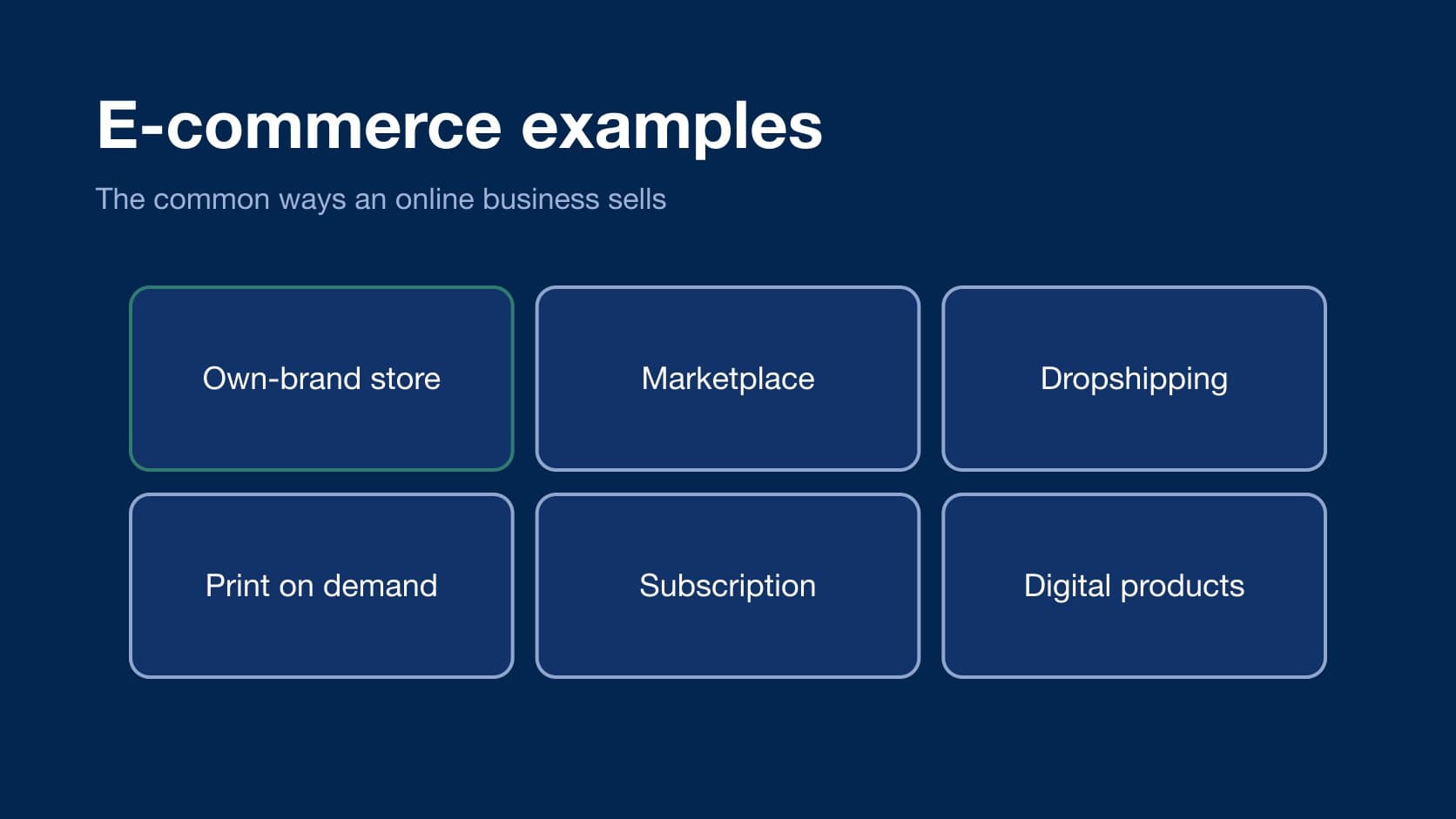
e-commerce comes in a handful of shapes. most online businesses are one of six: an own-brand store, a marketplace, a dropshipping store, print on demand, a subscription, or digital products. here is each one, with a well-known example and what it means for the marketing.
own-brand store
a business that makes or sources its own products and sells them under its own name, usually on its own website. also called direct to consumer (DTC). Gymshark, the UK gym-wear brand, is a familiar example.
what it means for marketing: you own the customer and the margin, and you have to bring every visitor yourself. ads and product imagery carry the business.
marketplace
a site where many sellers list products and the site handles discovery and checkout. Amazon, eBay and Etsy are the obvious ones.
what it means for marketing: the shoppers are already there, but so are your competitors, side by side. the main image and the first few photos decide whether anyone clicks.
dropshipping store
a store that sells products it never holds; a supplier ships each order straight to the customer.
what it means for marketing: the same products are often sold by many stores, so the ad is what makes yours different. dropshippers test a lot of creative. one asked:
"How many creatives would you test before deciding on a winner?"
more in AI dropshipping.
print on demand
your designs printed on t-shirts, mugs or posters only when someone orders, by a print partner who ships it.
what it means for marketing: the design is the product, and shoppers need to see it on a real-looking item — mockups and lifestyle shots do most of the selling.
subscription
customers pay every week or month for a box, a refill or a service — meal kits, razors, coffee, pet food.
what it means for marketing: the first order often loses money and the later ones make it, so the ads have to win customers who stay, and the emails have to keep them.
digital products
things delivered as a download or a login: courses, templates, presets, e-books, software.
what it means for marketing: no shipping and high margins, but nothing physical to photograph, so screenshots, demos and short videos stand in for the product.
what they all share
whichever shape, an online business sells through a screen. every one of them needs product images, short videos and ads, and needs new ones as the old ones wear out. a seller on what it takes to keep up:
"enough “good enough” creatives to keep testing without waiting on a studio every time"
frequently asked questions
what are the main types of e-commerce?
by who buys: B2C, B2B and C2C. by how it sells: own-brand stores, marketplaces, dropshipping, print on demand, subscriptions and digital products.
what is the easiest e-commerce business to start?
dropshipping, print on demand and digital products need the least money up front, because there is no stock. "easy to start" and "easy to make money" are different things, though.
the summary
- six shapes: own brand, marketplace, dropshipping, print on demand, subscription, digital.
- one constant: all of them sell through images and video.
for the wider picture see e-commerce marketing. Clear Cortex makes product shots, mockup-style lifestyle scenes and UGC-style video ads from a product photo, in Marketing Studio.