 Clear Cortex
Running an e-commerce business: the four jobs, and where the time goes
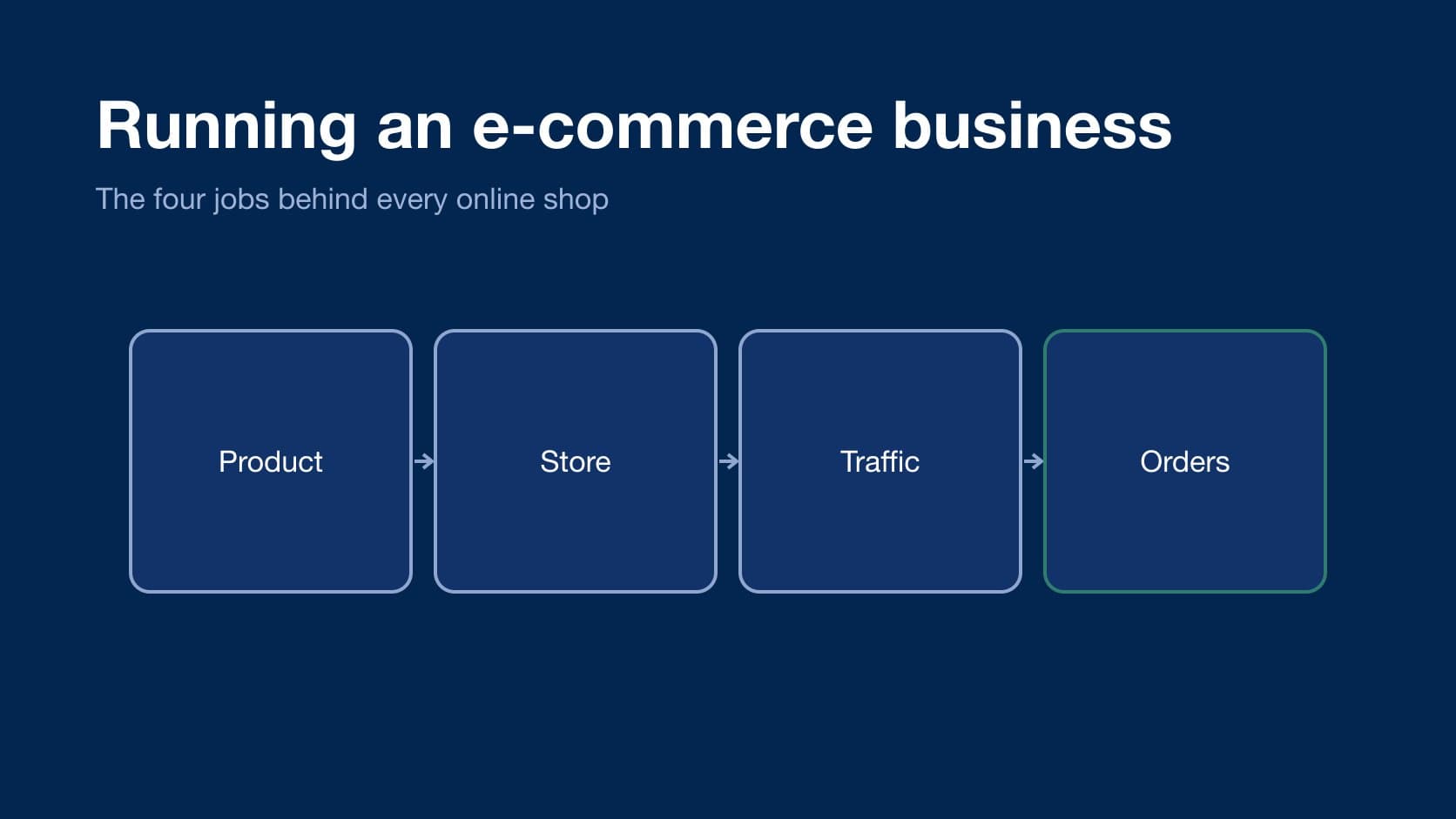
an e-commerce business sells products online and takes payment online. the shop itself is the easy part now — a platform will give you one in an afternoon. what makes it a business is the four jobs that run behind it every week: the product, the store, the traffic and the orders.
this guide is about those jobs, and where the time actually goes once a shop is running. if you're still deciding what an e-commerce business is, start with what is an e-commerce business.
the four jobs
- product: what you sell and where it comes from — made yourself, bought in stock, printed on demand, or shipped by a supplier (dropshipping).
- store: your own site, a marketplace listing, or both. product pages, prices, checkout.
- traffic: getting people to the store. ads, search, email, social, creators.
- orders: taking payment, shipping, returns, customer questions.
the first two are mostly set up once and adjusted. the last two never stop.
where the time goes
for most small shops, traffic takes the most time and the most money, and inside traffic the part that eats the week is making the ads. platforms reward fresh creative, and a small team has to produce it alongside everything else. one founder described their week:
"usually testing 10–15 creatives at a time"
another, choosing between selling on Etsy and their own site, asked the question most new shops get to quickly:
"how much you guys invest in the creatives when the budget is pretty low itself"
ways to run one
- own brand, own stock: most control over quality and margin, but money is tied up in stock before you know it sells.
- dropshipping: no stock; a supplier ships to your customer. cheap to start, thin margins, and delivery is out of your hands. see AI dropshipping.
- print on demand: your designs on products printed as they're ordered.
- marketplace-first: selling on Amazon, eBay or Etsy, where the shoppers already are, in exchange for fees and less control.
more on each, with examples, in e-commerce examples.
what to get right early
- margin after ads: price minus product, shipping, fees and what it costs to win a customer. a product that only breaks even before ads loses money after them.
- product photos that match the product: returns and refunds start when the thing that arrives doesn't look like the picture.
- a way to make creative cheaply: because you will need far more of it than you expect.
- email from day one: the customer you already have is cheaper to sell to than the one you're paying for.
frequently asked questions
is an e-commerce business profitable?
it can be; many aren't. the ones that last usually have a margin that survives the cost of ads, and a reason for customers to come back.
how much does it cost to start an e-commerce business?
the store can cost very little. the real cost is stock (unless you dropship or print on demand) and the money you spend testing ads to find out what sells.
do I need my own website?
no. plenty of shops start on a marketplace. your own site gives you the customer relationship and lower fees, at the cost of bringing every visitor yourself.
the summary
- what: a business that sells and takes payment online.
- the jobs: product, store, traffic, orders.
- where time goes: traffic, and inside it, making ads.
Clear Cortex makes the product shots and UGC-style ads a shop needs from one product photo — see Marketing Studio, and the wider picture in e-commerce marketing.