 Clear Cortex
What is dropshipping?
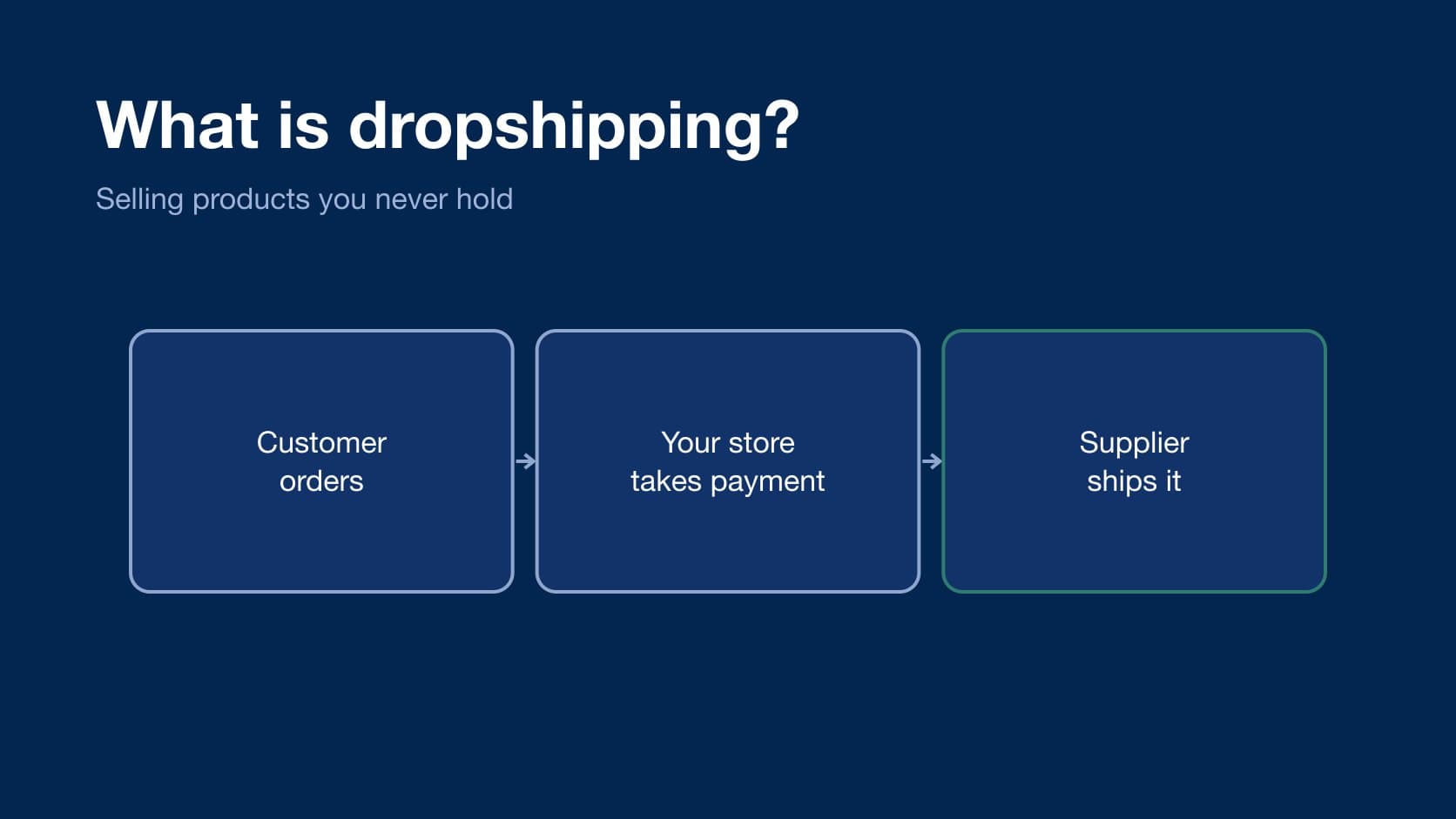
dropshipping is a way of running an online shop without holding any stock. you list a product and sell it; when an order comes in, you pass it to a supplier, and the supplier packs it and ships it straight to your customer. you never touch the product.
the shop makes its money on the gap between what the customer pays you and what you pay the supplier. everything else — the store, the ads, the customer service — is yours to run.
how dropshipping works
one order, step by step:
- the customer buys: they find the product on your store, usually through an ad, and pay your price.
- you order from the supplier: you pass the order and the delivery address to the supplier and pay their price. many store platforms do this step automatically.
- the supplier ships: they pack the product and send it directly to your customer, often with no sign of where it came from.
- you handle the rest: questions, delays, returns and refunds come to you, because the customer bought from you.
dropshipping vs holding stock
a shop that holds stock buys products up front, stores them and ships them itself. that ties up money before anything sells, but it controls quality, packaging and delivery speed. a dropshipping store spends nothing on stock, so it can test a product with only the cost of the ads — and gives up that control in exchange.
some sellers choose stock for exactly that reason:
"I chose to order real stock rather than dropship because I wanted control"
the pros
- little money up front: no stock to buy or store.
- easy to test: you can list a product, run ads and drop it within days if it doesn't sell.
- wide range: you can sell many products without a warehouse.
the cons
- thin margins: the supplier's price plus ads leaves less than you'd think.
- no control over delivery: slow or lost parcels land on your reviews, not the supplier's.
- the same products everywhere: other stores can sell the identical item from the same supplier.
whether that trade is worth making is in is dropshipping worth it.
where the ad comes in
because the product is often available from other stores, the ad is usually the only thing that makes yours different. dropshippers test many versions of an ad to find one that sells, and keep making new ones as the old ones wear out. one asked the question most of them get to early:
"How many creatives would you test before deciding on a winner?"
the supplier's photos rarely help, because every other store has them too. a seller put it simply:
"Flat lays are easier to produce, but usually underperform in ads."
what to make, and where AI helps, is in AI dropshipping.
frequently asked questions
what does dropshipping mean?
selling a product online that a supplier ships directly to the customer, so the seller never holds the stock.
is dropshipping a real business?
yes. it is an ordinary retail model; the seller is responsible to the customer for the product and its delivery, like any shop.
how do dropshippers make money?
on the difference between their selling price and the supplier's price, minus ads, platform fees and refunds.
how do I start dropshipping?
the steps are in how to start dropshipping, and the UK specifics in dropshipping in the UK.
the summary
- what: an online shop that sells products a supplier ships for it.
- upside: no stock, cheap to test.
- downside: thin margins, no control over delivery, the same products everywhere.
- the difference: mostly the ad.
Clear Cortex makes product shots and UGC-style video ads from a supplier photo, in Marketing Studio. the full map is in AI dropshipping.