 Clear Cortex
Dropshipping in the UK: the rules, and how to start
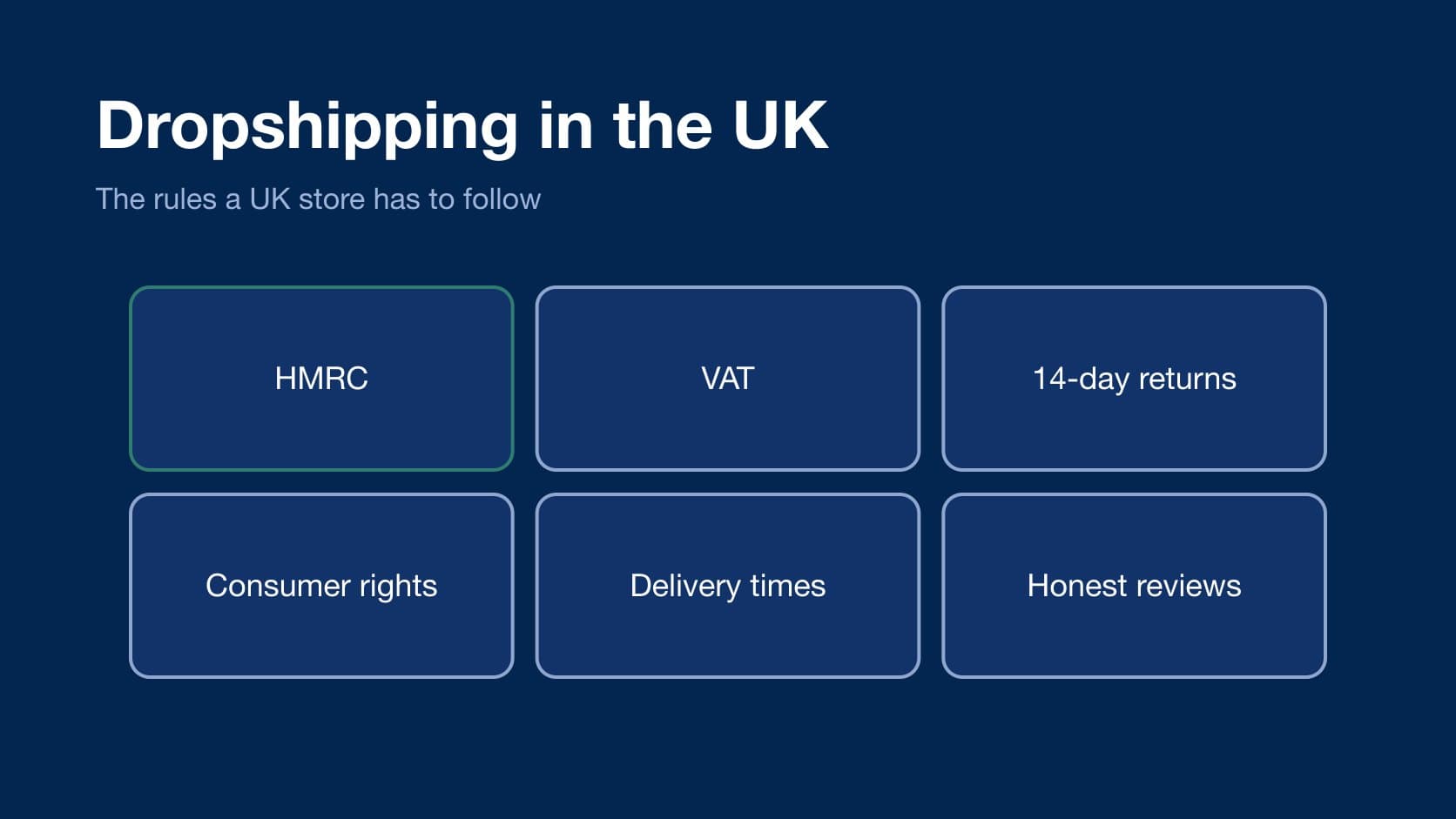
dropshipping in the UK works the same way as anywhere: you sell online, a supplier ships each order to your customer, and you never hold stock. what changes is the rules around it — tax, VAT on imports, and UK consumer law, which treats you as the seller whoever packed the parcel.
this guide covers the UK-specific parts. how dropshipping works in general is in what is dropshipping. it is a summary, not advice: check GOV.UK for your own situation.
registering with HMRC
once your trading income goes over the £1,000 trading allowance in a tax year, you need to register with HMRC, usually as a sole trader, and file a Self Assessment tax return. many people start that way and set up a limited company later.
VAT
- registering: you must register for VAT once your VAT-taxable turnover goes over £90,000 in a rolling 12 months (the threshold from 1 April 2024).
- imports of £135 or less: for goods sent from abroad to UK customers worth £135 or less, VAT is charged at the point of sale rather than at the border. if you sell through an online marketplace, the marketplace normally collects it; if you sell on your own store, that can fall to you.
- imports over £135: import VAT and customs duty can apply at the border, and someone has to pay them before the parcel is delivered. a customer asked to pay a charge on arrival rarely orders again.
consumer law: you are the seller
to a UK customer, the shop they bought from is responsible, not the supplier behind it.
- 14 days to cancel: under the Consumer Contracts Regulations, online buyers can cancel within 14 days of receiving the goods, and you must refund within 14 days of getting the goods back (or proof they were sent back).
- goods must be right: under the Consumer Rights Act 2015, goods must be as described, of satisfactory quality and fit for purpose. a product that doesn't match its photos is a problem for you.
- no fake reviews: the Digital Markets, Competition and Consumers Act 2024 bans fake reviews, from April 2025.
delivery times
UK shoppers are used to next-day delivery. a supplier shipping from overseas can take weeks, and the reviews that follow are left on your store. UK-based suppliers cost more but cut delivery times; whichever you use, say honestly how long delivery takes.
slow delivery is one reason some UK sellers skip dropshipping altogether. one, selling gifts:
"I chose to order real stock rather than dropship because I wanted control"
how to start dropshipping in the UK
- pick a product that ships well and can reach UK customers quickly.
- order a sample to check it matches the photos.
- set up the store with clear delivery times and a returns policy that meets the 14-day rule.
- register with HMRC when you pass the trading allowance.
- make your own photos and ads rather than reusing the supplier's.
the full steps are in how to start dropshipping.
frequently asked questions
is dropshipping legal in the UK?
yes. it is a normal way to sell, as long as you follow the same tax and consumer rules as any UK shop.
do I need a limited company to dropship in the UK?
no. most start as sole traders. check GOV.UK for which suits you.
do I need to register for VAT?
only once your VAT-taxable turnover goes over £90,000 in 12 months, though VAT on imported goods can apply to your sales before then.
is dropshipping worth it in the UK?
it depends on margin after ads and delivery speed. see is dropshipping worth it.
the summary
- tax: register with HMRC past the £1,000 trading allowance; VAT past £90,000.
- imports: VAT at the point of sale up to £135; duty and VAT can apply above it.
- consumer law: 14 days to cancel, goods as described, no fake reviews — and it's on you.
- delivery: slow overseas shipping shows up in your reviews.
Clear Cortex makes product shots and UGC-style video ads from a supplier photo, in Marketing Studio. the full map is in AI dropshipping.