 Clear Cortex
How to start dropshipping: a step-by-step guide
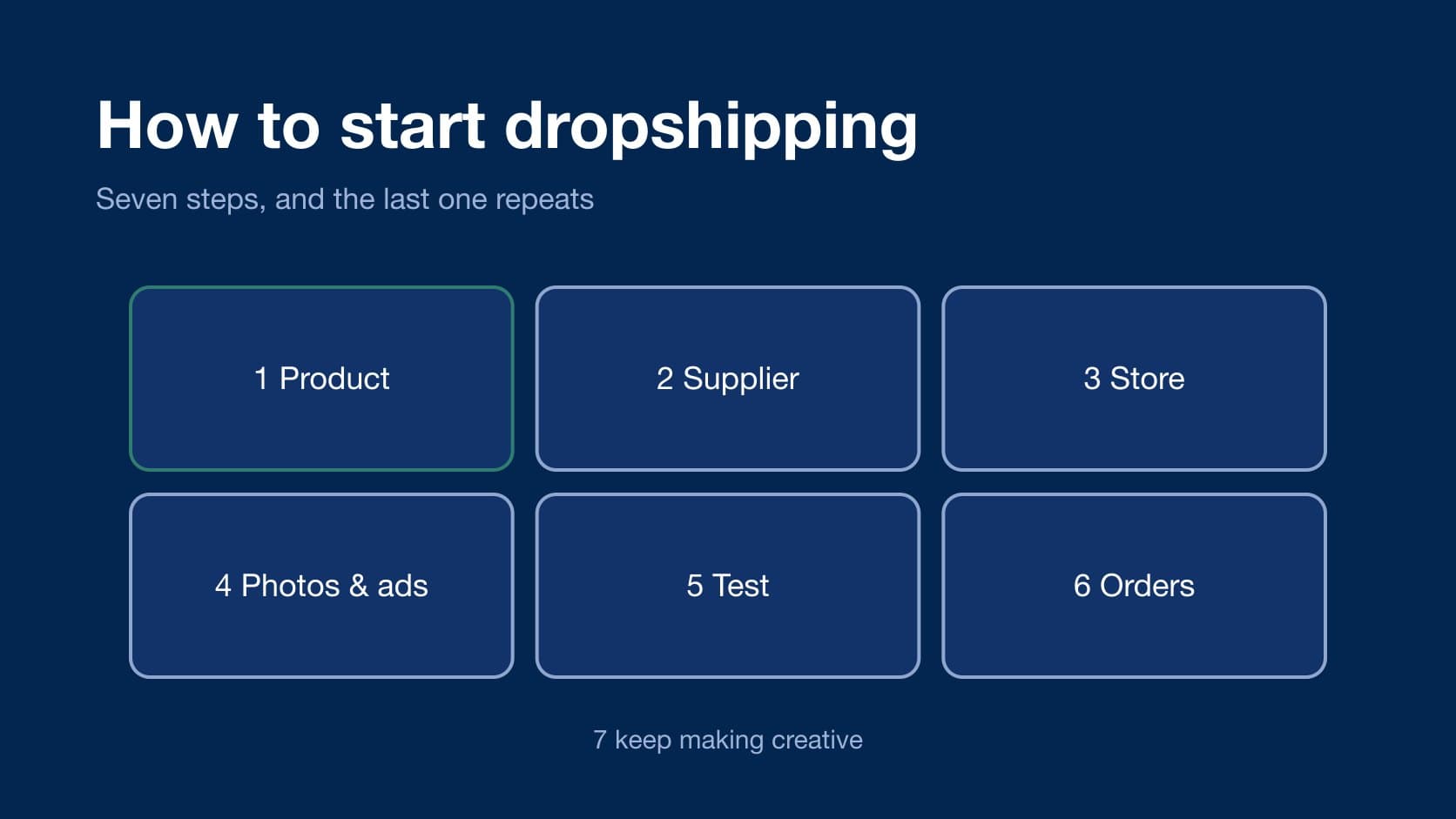
starting a dropshipping business takes seven steps: pick a product, find a supplier and test a sample, set up the store, make your photos and ads, test with a small budget, handle orders, and keep making new creative. the setup takes days. the last step never ends, and it's the one that decides whether the business works.
if you're not sure what dropshipping is yet, read what is dropshipping first. selling to UK customers? the tax and consumer rules are in dropshipping in the UK.
step 1: pick a niche and a product
choose a product you can describe in one line, that shows well in a short video, and that has room for a margin after ads. a niche you understand helps, because you'll write every ad for it. be wary of products every research tool is showing everyone; one seller found:
"I initially started with traditional dropshipping, but I quickly realized the available winning products were completely saturated, outdated, and overdone."
step 2: find a supplier and order a sample
compare suppliers on price, delivery time to your customers and how they handle faults. then order the product yourself. a sample tells you whether it matches the photos, how long delivery really takes and what the packaging looks like — and gives you something to photograph.
step 3: set up the store
a store platform gets you live quickly. what matters: product pages that answer the obvious questions, honest delivery times, a returns policy, and a checkout that works on a phone, because that's where most ad clicks land.
step 4: make product photos and ads
don't rely on the supplier's photos — every other store selling the same item has them. you need your own: a clean product shot, lifestyle scenes that show it in use, and short vertical videos for ads, ideally in a few different angles and hooks. a seller on why the plain shots aren't enough:
"Flat lays are easier to produce, but usually underperform in ads."
AI image and video models make this step much cheaper; where they help and where they don't is in AI dropshipping.
step 5: test with a small budget
run several ads at once on one platform with a budget you can afford to lose, and judge them on sales, not likes. most will fail; that's the point of testing. one founder described their routine:
"usually testing 10–15 creatives at a time"
step 6: handle orders and returns
orders go to the supplier, but questions, delays and refunds come to you. answer quickly, track every parcel, and keep a note of which supplier problems keep coming back.
step 7: keep making creative
ads wear out. when a winning ad's results drop, it needs replacing, and the replacement needs testing. the stores that last build a way to make new photos and videos every week. more ideas in dropshipping tips.
frequently asked questions
how much does it cost to start dropshipping?
the store and a sample cost little. the real cost is the ad budget you spend finding out what sells.
how long does it take to start?
the store can be live within days. finding a product and an ad that sell usually takes much longer.
is dropshipping worth it?
it suits some people and not others. see is dropshipping worth it.
the summary
- setup: product, supplier and sample, store.
- the real work: photos and ads, tested on a small budget.
- ongoing: orders, returns, and new creative every week.
Clear Cortex makes product shots and UGC-style video ads from a supplier photo, in Marketing Studio. the full map is in AI dropshipping.