 Clear Cortex
Influencer marketing agency: what they do and what to ask
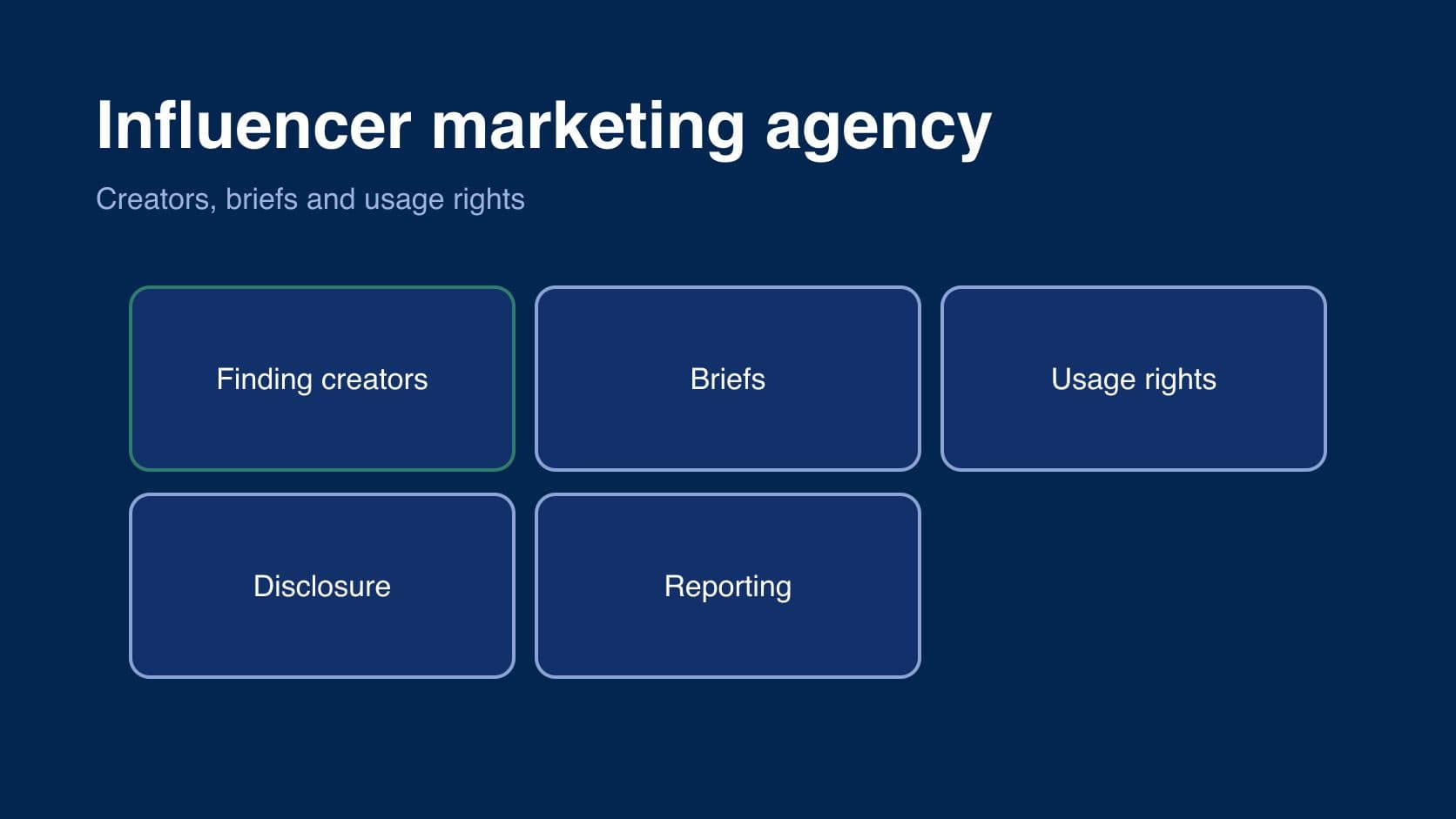
an influencer marketing agency connects brands with creators who have an audience — on Instagram, TikTok, YouTube and the rest — and runs the campaign: finding the right people, negotiating, briefing, checking the content, making sure it is properly disclosed, and reporting on what it did. you are paying for their relationships and for someone to manage a lot of moving parts.
what an influencer agency does
- finding creators: people whose audience matches your customers, not just big follower counts.
- negotiating: fees, deliverables, timing and usage rights.
- briefing and approvals: what the creator should say and show, and checking it before it goes out.
- compliance: making sure every paid post is clearly labelled as an ad.
- amplification: running the best posts as paid ads, from your account or the creator's.
- reporting: reach, engagement and, where it can be tracked, sales.
influencer, UGC, and the line between them
an influencer posts to their own audience; a UGC creator makes customer-style content for the brand to post or run as ads, and their audience doesn't matter. the line has blurred, and people have noticed:
"Are paid UGC creators just the new influencers?"
and the two are increasingly combined, with creators' posts run as ads:
"I’m noticing influencers are launching ads for their sponsored brand via their own profiles on meta."
if what you really need is content for ads rather than a creator's audience, a UGC agency or doing it yourself may fit better. the differences are in UGC agency and the overview at UGC.
how influencer agencies charge
commonly a management fee or retainer on top of what the creators are paid, a fee per campaign, or a percentage of the total campaign budget. creator fees themselves vary enormously by audience and platform. ask whether usage rights — running the content as ads, and for how long — are included or extra; that is where costs grow.
what to ask an influencer agency
- how do you check a creator's audience is real and matches my customers?
- who owns the content, and can I run it as ads? for how long?
- how do you make sure posts are labelled as ads?
- how will you measure sales, not just views?
disclosure rules for paid creator content are summarised in the disclosure section of UGC ads.
where AI fits, and where it doesn't
AI video can now put a presenter on screen holding your product, which is useful for testing hooks and formats before paying creators. it can't give you a real person's audience or a real person's opinion. an AI presenter can demonstrate a product; it must not pretend to be a customer who has used it — fake testimonials are banned in the UK and the US. what generated content is good and bad at is in AI UGC.
the in-house alternative
smaller brands often run creator outreach themselves: a handful of well-matched creators, gifted product, a simple brief. it takes time rather than budget. pairing it with AI-made ads to test angles first means you brief creators on what you already know works.
frequently asked questions
what does an influencer marketing agency do?
it finds creators, negotiates and briefs them, checks and labels their content, and reports on the campaign.
is an influencer agency the same as a UGC agency?
no. an influencer agency buys access to an audience; a UGC agency buys content for you to run.
do influencer posts have to be labelled?
yes, when the creator is paid or given something in return. UK and US rules both expect it to be clear.
the summary
- what it is: an agency that runs creator campaigns for brands.
- what to check: audience quality, usage rights, disclosure, measurement.
- the alternative: run outreach yourself; test angles with AI-made ads first.
Clear Cortex isn't an agency and doesn't supply creators. it makes UGC-style, review and unboxing ads from one product photo, with leading video models in one place, in Marketing Studio — for testing before or alongside creator work. the overview is AI marketing agency.