 Clear Cortex
Flux.2: Black Forest Labs' image models, explained
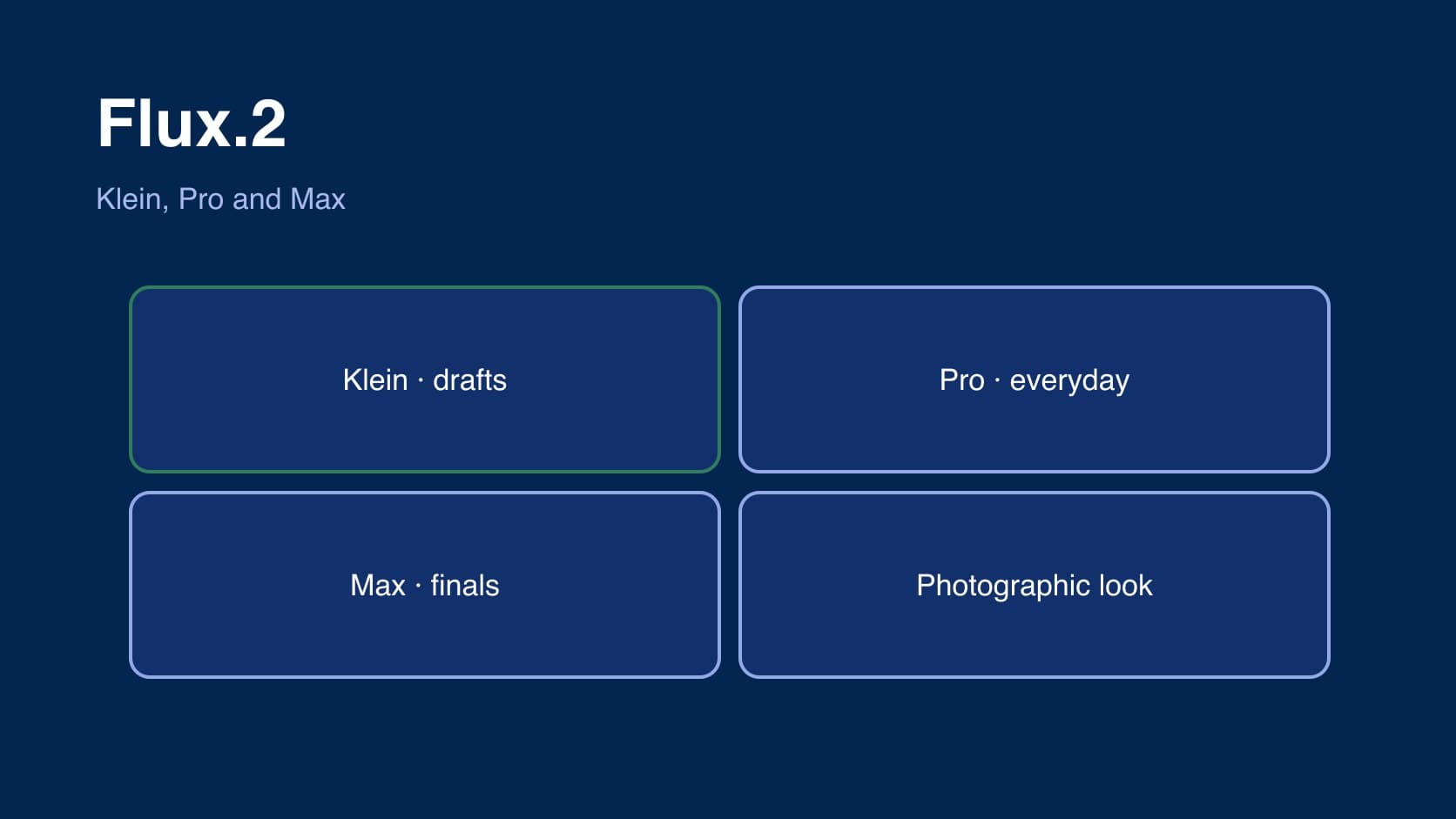
Flux.2 is the image model family from Black Forest Labs, a lab founded by researchers who worked on Stable Diffusion. it comes in three versions — Klein, Pro and Max — from quick drafts to the most detailed photographic output, and all three are in Clear Cortex.
the short answer
- Klein: fast, cheap drafts.
- Pro: sharp, photographic detail; the everyday choice.
- Max: Black Forest Labs' highest fidelity, for finals.
- known for a natural photographic look. which one to use.
what it is good at
- photographic realism: skin, fabric and light that read as a camera, not a render.
- style control: it follows a described look closely.
- cheap exploration on Klein before committing on Pro or Max.
"a street portrait of an older fisherman in a yellow oilskin, harbour behind him out of focus, overcast light, weathered skin texture, 85mm, natural colour, documentary photography"
where it falls short
- fewer reference images than Nano Banana or GPT Image 2 — and Klein fewer still — so heavy combining and editing suit those better.
- one image per request.
how to use it
open image mode with Flux.2 Pro, pick the shape, write a photographer's brief, and generate. model pages: Klein, Pro, Max. what it is in one page: what is Flux.2.
frequently asked questions
who makes Flux?
Black Forest Labs, a German AI lab founded by researchers who worked on Stable Diffusion.
Flux.2 or Nano Banana?
Flux.2 for a photographic look from text; Nano Banana for editing and combining images you supply.
the summary
- Black Forest Labs' image models.
- Klein to draft, Pro by default, Max for finals.
- best for photographic realism.
comparing models: AI images.