 Clear Cortex
Dropshipping examples: the kinds of store, and what they sell
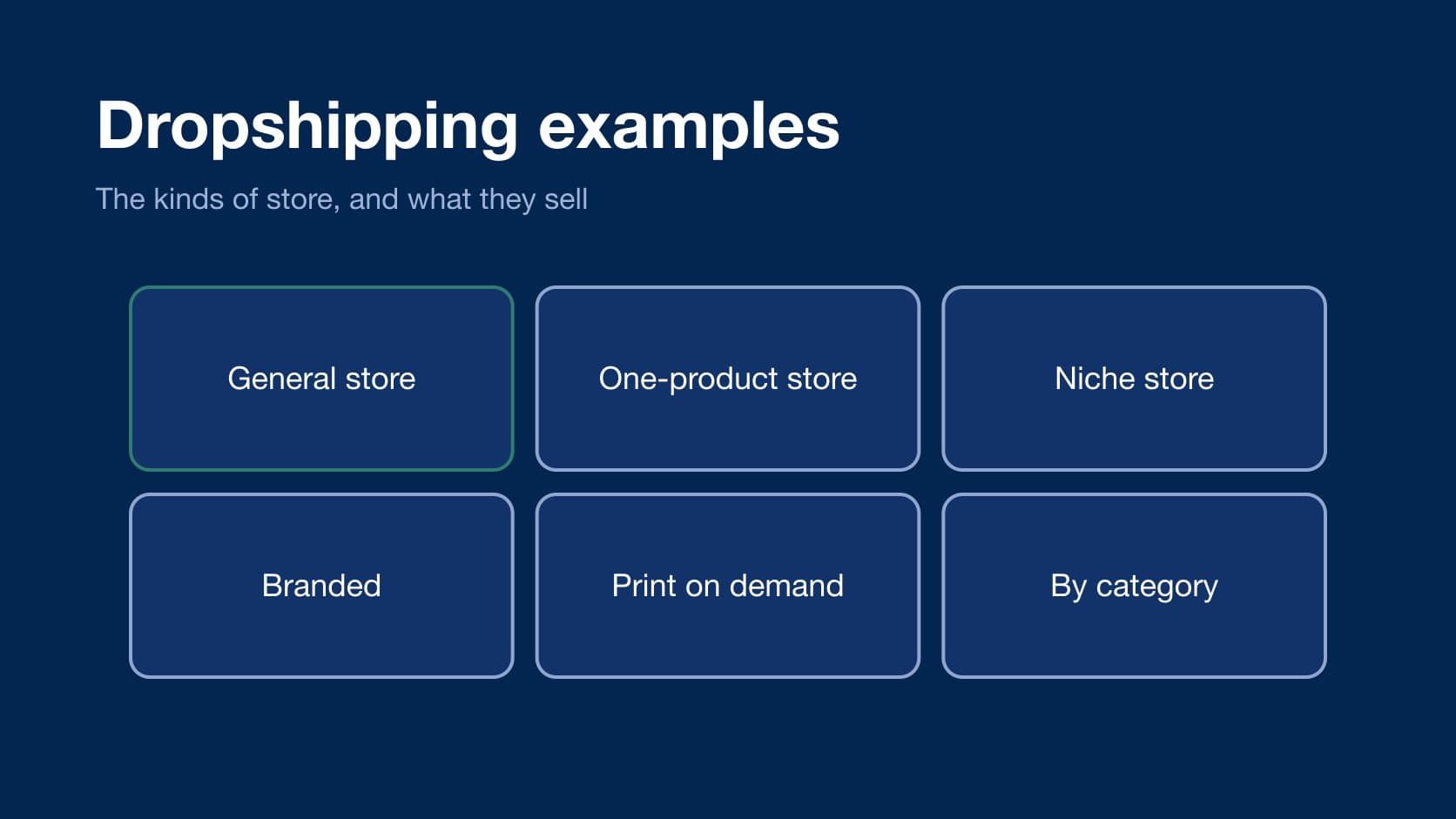
dropshipping stores come in a few recognisable shapes, and they sell in a few recurring categories. this page goes through both, and for each one what it means for the ads — because in dropshipping, where many stores can sell the same product, the ad is usually the only thing that differs.
examples by type of store
general store
one shop selling anything that tests well, across unrelated categories.
for the ads: each product needs its own creative from scratch, and the store itself builds no trust, so the ad has to do all the work.
one-product store
a whole store built around a single product, with the page written to sell just that.
for the ads: the product never changes, so the angles have to. the store lives or dies on how many fresh hooks it can make for the same thing.
niche store
a store for one audience — dog owners, home cooks, runners — selling several related products.
for the ads: a consistent look and voice across products, and the chance to sell a second product to the same customer.
branded dropshipping store
still dropshipped, but sold under the store's own brand, often with custom packaging or private-label products. see branded dropshipping.
for the ads: the creative has to look like one brand every time — the same style of product photos, the same kind of video.
print-on-demand store
your own designs on t-shirts, mugs or prints, made and shipped by a print partner when someone orders.
for the ads: shoppers need to see the design on a real-looking item, so mockups and lifestyle shots carry the sale.
examples by product category
- pet products: beds, toys, grooming tools. ads work best with the animal using it — short clips beat still photos.
- home and kitchen: organisers, gadgets, decor. before-and-after and "watch it work" clips sell these.
- beauty and skincare tools: brushes, devices, accessories. UGC-style routines sell well, and claims about results need care.
- gadgets and phone accessories: the "I didn't know I needed this" category. the first two seconds of the video decide everything.
- jewellery: close-up, well-lit detail shots and on-body photos. cheap-looking images sink these fast.
what the examples share
the hard part in all of them is the same. the products are easy to find — which is also the problem. one seller who started this way:
"I initially started with traditional dropshipping, but I quickly realized the available winning products were completely saturated, outdated, and overdone."
when anyone can sell the product, what you can own is the way it's shown. that means a steady supply of photos and videos, and a way to make them without a studio. another seller described what they were after:
"enough “good enough” creatives to keep testing without waiting on a studio every time"
frequently asked questions
what is an example of dropshipping?
a store that lists a pet bed, takes your order and payment, then has a supplier post the bed straight to you. the store never touches it.
what sells best in dropshipping?
nobody can tell you in advance. products that are easy to show in a short video, and that solve an obvious problem, tend to test well.
is a niche store better than a general store?
a niche store builds trust and repeat customers more easily; a general store tests products faster. many sellers test in one and build in the other.
the summary
- store types: general, one-product, niche, branded, print on demand.
- categories: pet, home, beauty, gadgets, jewellery.
- the constant: the ad is what makes one store different from the next.
more on the basics in what is dropshipping and dropshipping tips. Clear Cortex makes product shots and UGC-style video ads from one product photo, in Marketing Studio; the overview is AI dropshipping.