 Clear Cortex
Branded dropshipping: your name on a product someone else ships
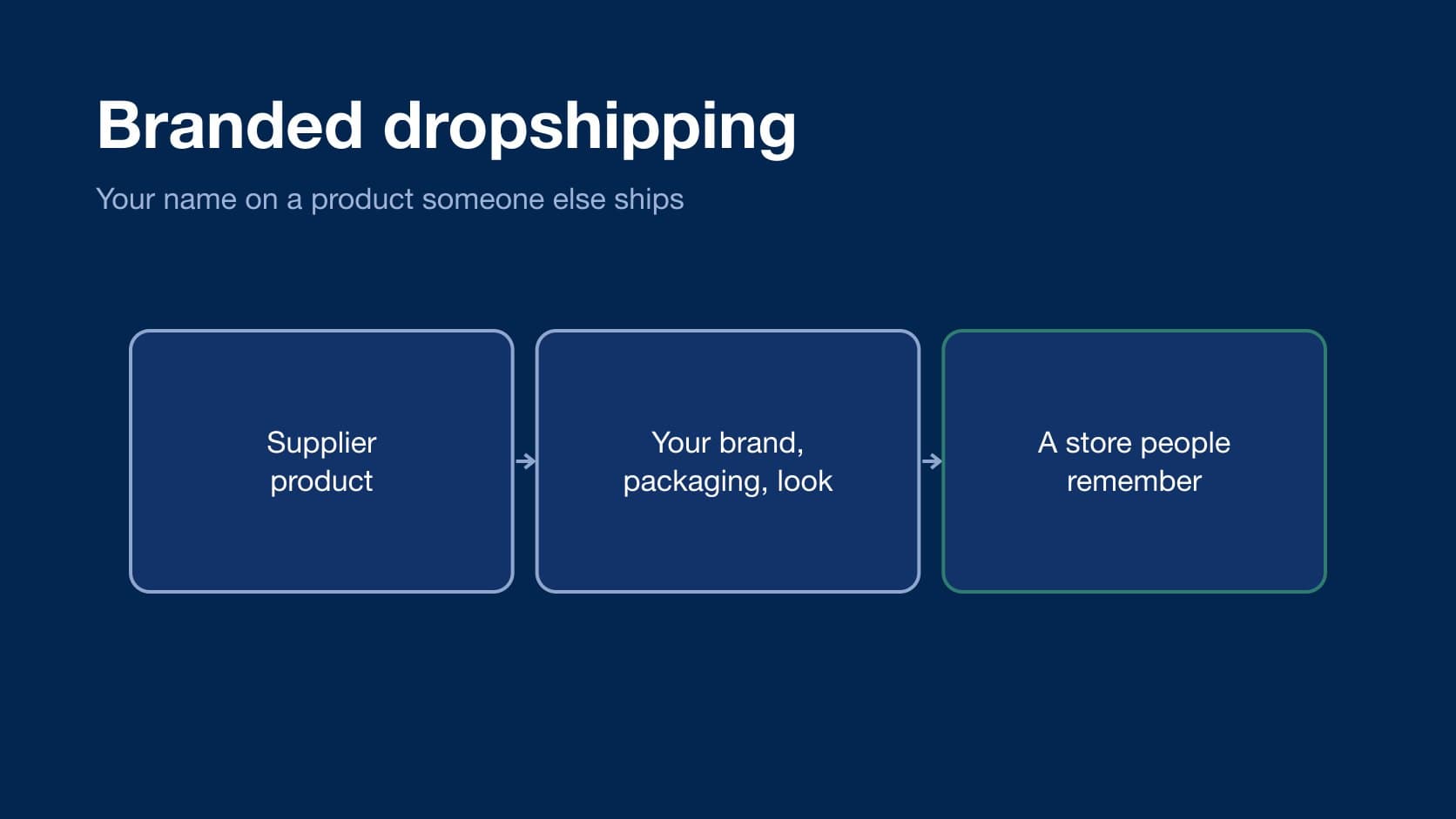
branded dropshipping is dropshipping under your own brand. a supplier still holds the stock and ships each order, but the customer sees your name — on the store, on the packaging, sometimes on the product itself — instead of an anonymous parcel from a warehouse.
it sits between plain dropshipping and running a brand with its own stock, and it changes what your marketing has to do.
what branded dropshipping includes
- a brand name and look: a store that feels like one company, not a catalogue of whatever tested well this week.
- custom packaging and inserts: branded boxes, mailers, thank-you cards. many suppliers offer this for an extra charge or a minimum order.
- private label: the supplier puts your logo on the product itself. usually needs a minimum order quantity.
- a narrower range: products that belong together, so the brand means something.
how it differs from generic dropshipping
in generic dropshipping, the same product is often sold by many stores using the same supplier photos, and the cheapest or loudest ad wins. that is why so many sellers find the usual products crowded:
"I initially started with traditional dropshipping, but I quickly realized the available winning products were completely saturated, outdated, and overdone."
branding is the way out that doesn't need a warehouse. a customer who remembers your name can come back, search for you, and trust the second order — which a generic store rarely gets.
why the creative matters more here
a brand is mostly what people see, again and again. that puts more weight on the photos and videos than in plain dropshipping:
- consistent product photos: the same lighting, backgrounds and style across every product, so the store looks like one shop.
- your own images, not the supplier's: supplier photos are shared by every store selling the item, which is the opposite of a brand.
- a recognisable kind of ad: UGC-style videos and lifestyle scenes in one look, so someone who saw the last ad recognises the next.
- a lot of it: brands still need fresh creative as ads wear out. one owner on what happens when they don't:
"clearing this debt requires a massive influx of new ideas that we just don't have."
the step toward holding stock
many branded dropshippers eventually buy stock of their best-sellers: better margins, faster delivery and full control over quality. one seller explained why they went straight there:
"I chose to order real stock rather than dropship because I wanted control"
branded dropshipping lets you build the brand first and only commit money to stock once you know what sells. the brand — and the library of photos and ads behind it — carries over either way.
frequently asked questions
is branded dropshipping worth it?
it costs more up front than plain dropshipping and margins per order can be similar, but repeat customers and less price competition make it easier to last. more on the wider question in is dropshipping worth it?
what is private-label dropshipping?
the supplier makes or brands the product with your name and logo, then ships it to your customers as orders come in.
do I need custom packaging?
no, but it is one of the cheapest ways to make an order feel like it came from a real brand. a branded insert card is a common first step.
the summary
- what: dropshipping under your own brand name, packaging and sometimes label.
- why: less price competition and customers who come back.
- the work: consistent, recognisable photos and ads — and plenty of them.
- where it leads: often to holding stock of the best-sellers.
see also dropshipping examples and how to start dropshipping. Clear Cortex makes product shots and UGC-style video ads in a consistent look from one product photo, in Marketing Studio; the overview is AI dropshipping.