 Clear Cortex
AI advertising: what it actually means, and where it works
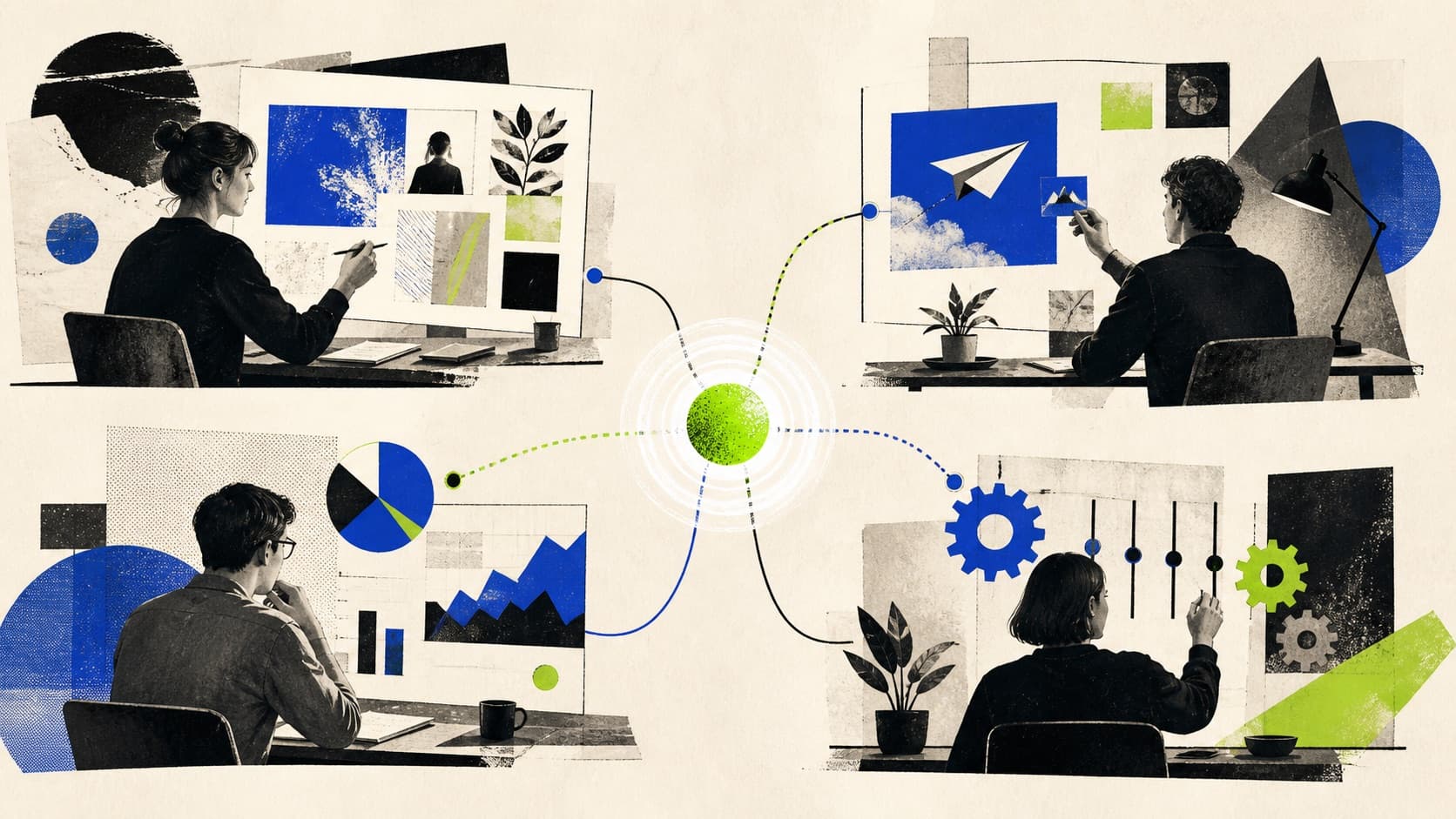
"ai advertising" gets used to mean four unrelated things, which is why every conversation about it goes badly. someone says it doesn't work, someone else says it's printing money, and they are talking about different activities.
so before anything useful can be said, the term has to be split.
the four things people mean
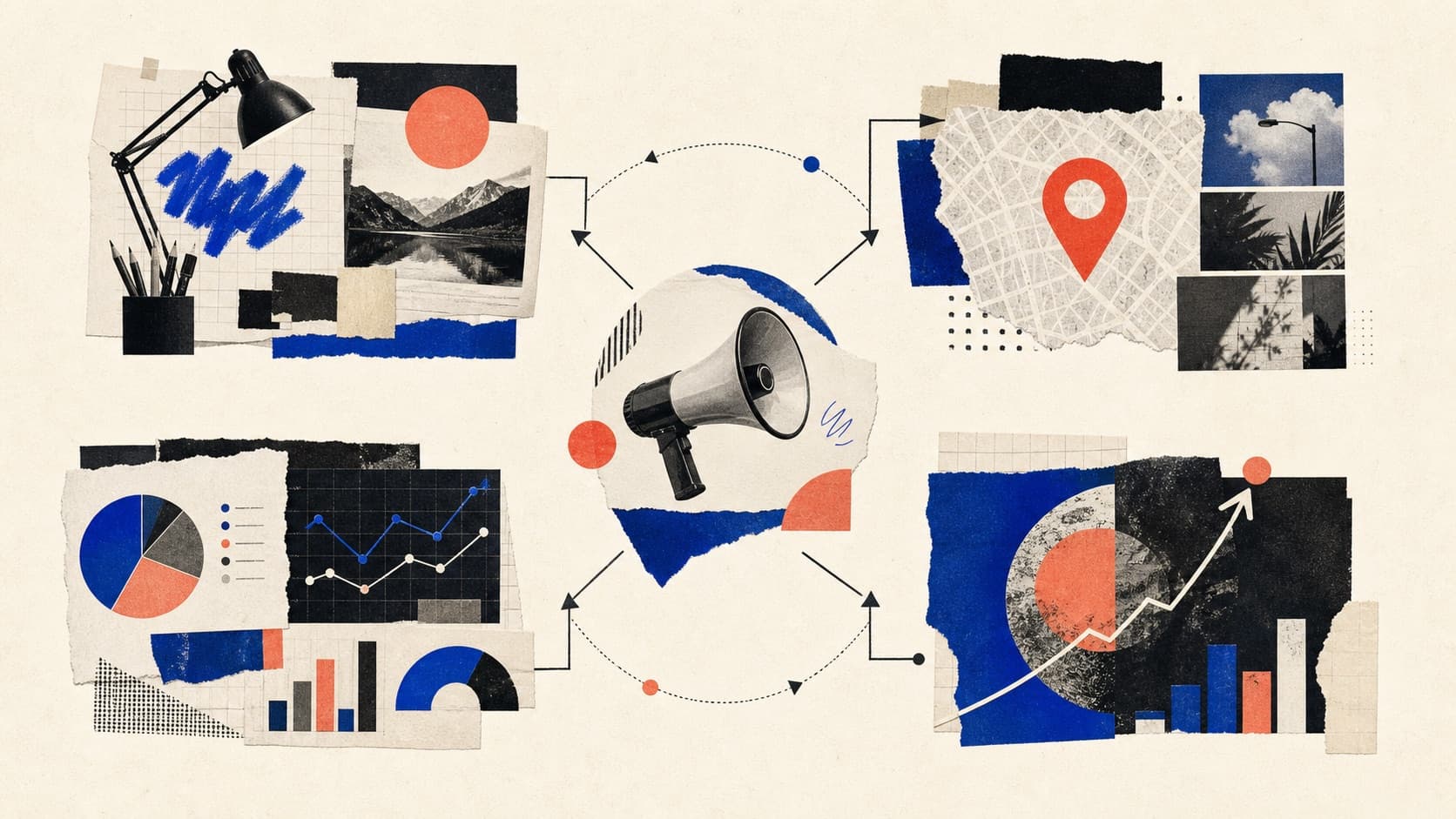
one: ai making the creative. generating the image, the video, the script, the voice. this is what most people mean when they say it, and it is the one with the loudest opinions attached.
two: ai running the buying. the platform deciding targeting, placement and bid on your behalf. advantage+, performance max, and everything downstream of them. you did not opt into this and it is the largest actual change in the last few years.
three: ai doing the analysis. reading the account, finding the pattern, telling you what to do. a much smaller category than the marketing around it suggests.
four: ads for ai products, which is a vertical, not a technique, and is only in the list because it clogs up the search results.
these have almost nothing in common. the first is a production question, the second is a control question, the third is a diagnosis question. bundling them is why people talk past each other. i'll take them in turn, with the caveat that most of the noise is around the first and most of the money is decided by the second.
one: ai making the creative
start with the fact that makes this economically inevitable rather than a preference.
most creative does not work. you run a lot of it to find the small number that does. the volume is not vanity, it is search — you are sampling a space to find a winner. so anything that lowers the cost per attempt gets adopted whether anyone likes it or not.
that is the whole reason this category exists, and it is stated most bluntly from the buying side:
"why would i pay a creator $300 when i can pay ai less than $5 to create the same lie."
and the arithmetic gets quoted approvingly by people selling it:
"ultra realistic ugc video made with omni flash + nano banana lite for $5."
so the price of an attempt has fallen by roughly two orders of magnitude. that part is real and it is not reversing.
the part that is not going well
the public reaction is worse than anyone selling this admits. the corpus is full of ordinary people responding to ai ads, and it is close to uniformly hostile:
"feel like seeing shitty ai ads like only makes me feel all the more repulsed towards whatever product/service theyre selling"
"if you're a startup, and you create ai ads with shitty ai voices and auto-captions, just know that i hate you and will never become a customer."
"bruh when restaurants use ai ads for their food and shit 😭 like, show me the fucking food you make, not this foul worm infested ai generated image"
that last one is the useful one, because it names the actual failure. it is not that ai was used. it is that a restaurant showed a generated image instead of the thing it sells. the objection is substantive, not aesthetic.
and from a practitioner watching what converts:
"people are sick of ai slop in their feed and the genuine-feeling stuff is what converts, so they're using the exact thing everyone's tired of to recreate the one thing everyone wants."
that is the tension in one sentence and it is worth sitting with, because it predicts the outcome: the winning use is the one that does not read as ai, which means the more cheaply you produce, the harder you have to work on everything except production.
what the people running it actually report
past the noise, the practitioners split into three positions and all three are defensible.
the sceptic, from someone who inherits accounts:
"taking over ad accounts from people who are touting ai ugc is always pretty hysterical, because you see how shitty a job they actually do when it comes to performance."
the moderate, and probably the most accurate line in the whole corpus:
"hate to break it to you but ai ugc done right passes most avg persons filter as real. that being said, talking head real ugc still converts better. i've tried both now at this point and if you're doing ai ugc right, you can definitely pull massive views."
and the pragmatist, describing an actual workflow rather than a position:
"i use this to validate a format and once i find a good one, i get human ugcs to produce it at scale without risking wasting a bunch of money."
put together, the honest summary is: cheap generation is good at finding the angle, and worse at being the ad. use it to search, not to ship — and if you do ship it, understand you are accepting a conversion discount in exchange for volume, and that trade is sometimes worth it and sometimes not.
there is also a strategy that avoids the whole argument, worth knowing because it keeps appearing among people reporting wins:
"an ad format that is crushing for us right now: comic book ads. instead of chasing ai realism like everyone else, you draw a comic scene of the exact situation your customer is stuck in."
and its mirror image, from someone giving a decision rule:
"make it look real and it converts. or make it obviously ai, lean into it fully, and the audience respects that you're not hiding anything."
the failure zone is the middle. almost-real is the thing people hate.
the mistake that costs more than the creative
this is the part most articles about ai advertising leave out, and it wastes more money than bad generation does.
when performance drops, the reflex is to blame the creative and make more. very often the problem is that the account cannot get enough conversions to optimise on, and adding creatives makes that strictly worse — the same budget now splits more ways, every ad gets less data, and everything looks worse than it did.
the corpus is unusually clear-eyed about this:
"'creative fatigue' is one of the most overused diagnoses in facebook advertising and it's causing people to waste money on new content they don't need."
"i'm getting tired of hearing 'just test more creatives' because at some point there has to be more to it than simply producing video #16, #17 and #18."
"they are bad at understanding: where to send traffic, what the traffic does there, the offer that lives there. most businesses that come to me have been told over and over they have a creative problem."
and the diagnostic that separates the two cases:
"but what has happened however is they've seen your ads 2 times in the same format, the same visual, same treatment, same wrapper on the same offer and their brain has filed it as seen that shape before, scroll pass — and that's not exhaustion, that's pattern recognition."
so before ai advertising is the answer, work out which question you have. genuine fatigue — a creative that worked, ran, and stopped as frequency climbed — is fixed by new creative, and ai makes that cheap, which is a real win. a starving account is fixed by budget, consolidation or a broader audience, and pouring generated variations into it accelerates the problem. an offer or landing-page problem is not fixed by creative at all.
cheap creative is a good answer to exactly one of those three, and it is very good at making the other two invisible for another month.
two: ai running the buying
this is the bigger change and it gets a fraction of the attention, because there is nothing to post a screenshot of.
the direction is consistent: platforms are absorbing targeting, placement and bidding. what you control is shrinking, and what remains is mostly the creative, the offer and the measurement. that is not a marketing claim, it is what the people doing the work observe:
"the real competitive edge has shifted entirely to creative diversity, testing distinct conceptual angles like raw ugc versus product demonstrations rather than wasting time playing with manual targeting buttons."
and the anxiety that comes with it, asked plainly:
"if you've built your whole targeting edge around audience segmentation, does that skill set start losing relevance on advantage+ campaigns specifically, or just get abstracted away?"
"just got asked 'if pmax and ai max do the bidding, targeting and creative for me, why would i still pay a specialist?'"
the honest answer to the second one is: because the machine optimises inside the constraints you hand it, and choosing those constraints is now the entire job. what you feed it, what you tell it to optimise for, what offer sits at the end, and whether the thing it is measuring is the thing that makes money. those decisions did not get automated. they got concentrated — there are fewer of them and each one matters much more.
the loss of visibility is a real cost and worth naming:
"had no idea what to change to impact performance or how context targeting was impacting match quality, because there's no reporting on it."
that is the trade. more of the work is done for you, less of it is legible, and diagnosis gets harder at exactly the moment the levers get fewer.
three: ai doing the analysis
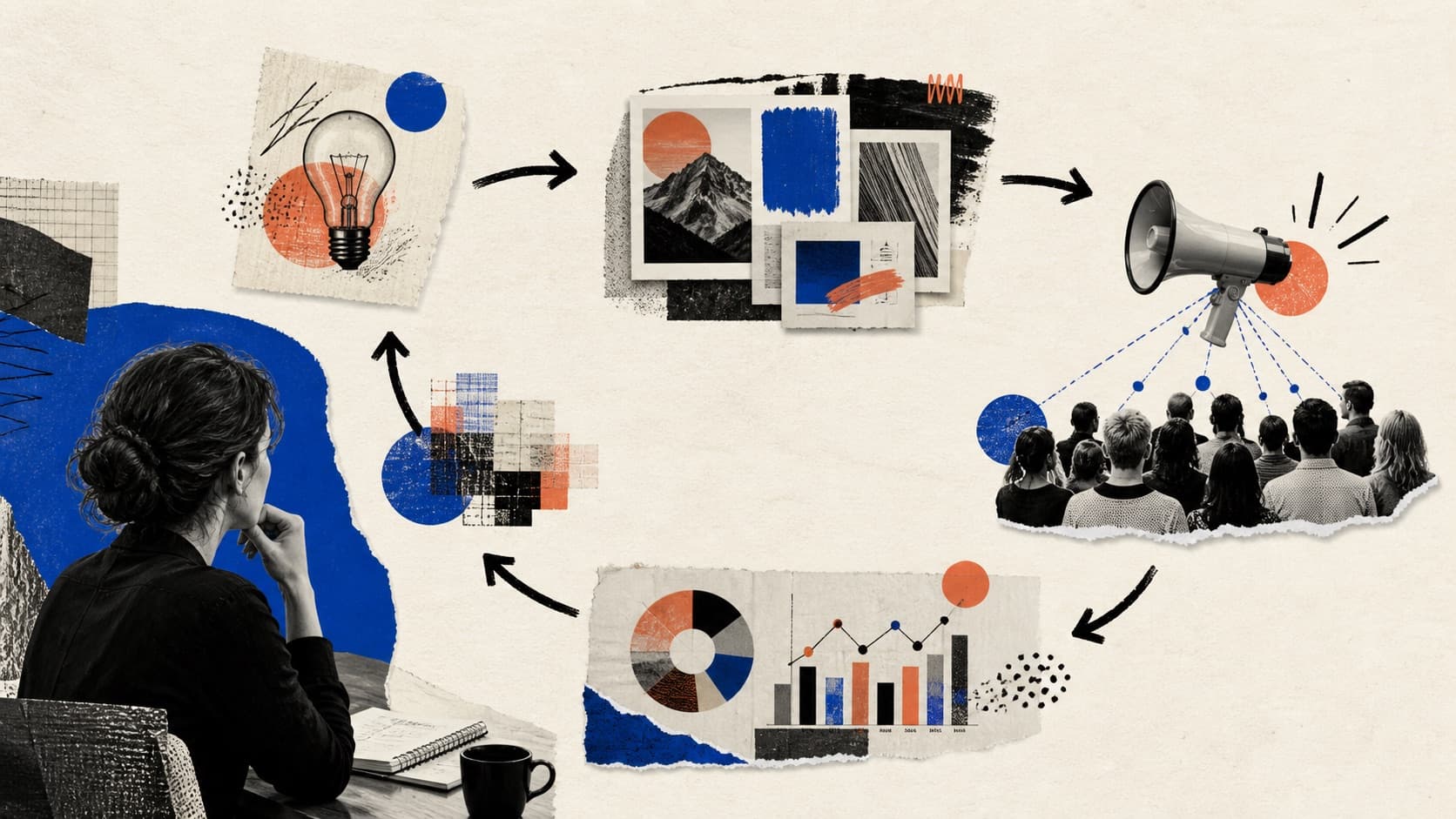
the smallest of the three, and the one where the gap between pitch and delivery is widest.
the pitch is an agent that reads your account and tells you what to do. the reported experience:
"even after i manually action a suggestion, like creating a g2 profile, it is not able to even go validate if the g2 profile has even been created, so it never clears the action and just keep suggesting that over and over again."
"you end up burning more credits explaining the same objective over and over while 'supercomputer' limps along pretending to be an autonomous creative agent."
and the wider version of the same disappointment:
"plenty of companies are still struggling to get meaningful roi from ai, and many are hiring more people to integrate and manage these tools effectively."
where it does work is narrower and less exciting: summarising, sorting, and reading volumes of text nobody has time for. one line describes the shape of the real win better than any product page:
"he spent 5-6 hours reading 1,000+ collagen reviews on reddit by hand."
that is a genuine automation win. "tell me what to do about my roas" is not, yet.
the thing everyone underestimates: the tooling gets away from you
one theme runs through all three categories and gets almost no coverage, so it is worth ending on.
the workflow fragments. every task goes to a different tool and the connective tissue is a human with too many tabs open:
"are you using one tool from start to finish, or mixing a few — one for images, one for video, one for voiceover, one for editing?"
"just curious how many tabs do you guys usually have open when you're making a 30-second clip?"
"are you still wiring together a five-tool stack…"
and the cost is not just annoyance, it is money and lost work:
"the agent tends to mix up references, i wasted probably about 3k + credits before i gave up and switched to manually pasting prompts in the studio."
"all this is very time consuming and burning through a majority of our money, we tried using claude and different ai's to refine the prompting process but even then it's still not as efficient."
"between consumer skepticism, tool fragmentation, and the gap between 'cool image' and 'effective marketing asset,' most teams are struggling to harness this shift."
that last phrase — the gap between a cool image and an effective marketing asset — is the whole subject in seven words.
and there is a quieter cost, which is that the record disappears. when the reference, the prompt, the brief and the output all live in different places, you lose the ability to answer "what produced the one that worked" a week later. someone put it exactly:
"how can i make sure i don't lose track of the sequence it came from so if i want to add or make some changes it would be easier?"
that is not a generation problem. no better model fixes it. it is a workspace problem, and it is the reason a lot of teams find that their cost per attempt fell and their output did not actually improve.
the summary
- ai advertising is four different things. most arguments about it are two people discussing different ones.
- generation got cheap, judgement did not. cheap attempts are only worth having if you can tell which one won and why.
- the audience reaction is genuinely negative, and the objection is usually substantive — showing a generated thing instead of the real thing. either look real or be openly synthetic; the middle is where the hostility lives.
- most "we need more creative" problems are not creative problems. diagnose starving budget, offer and landing page before generating anything.
- the automated buying is the bigger shift, and it moves the job from targeting to choosing constraints — fewer decisions, each worth much more.
- the analysis tools are behind their marketing. they are good at reading volume, not at telling you what to do.
- the practical bottleneck is fragmentation. cheap generation across six tools with no record of what produced what is how teams end up spending more and learning less.