 Clear Cortex
How to choose an AI ad platform

this is not a list of tools, and it is worth saying why up front rather than burying it.
the category turns over faster than any list can be maintained. the most honest description of it in the corpus was written by somebody who builds in it, about their own product:
"It’s also a directory of every other shit AI tool exactly like mine, because apparently 20 of them launch every day."
a ranked list assembled today is wrong by christmas, and the ones that survive will not be the ones that were best at launch. what does not go stale is the set of questions that separate a tool you will still be paying for in a year from one you will quietly cancel. so: criteria.
the people asking are asking clearly enough:
"What are the best AI Ad Generators/SaaS tools in 2026?"
"Starting with AI UGC for paid social — what tools are you actually using in 2026?"
"Which tools are overrated and mostly marketing hype?"
and one person, mid-subscription, asking the question that this whole article exists to prevent:
"Just trying to figure out if I'm bleeding money on the wrong platform or just being impatient."
the reframe that makes the decision tractable
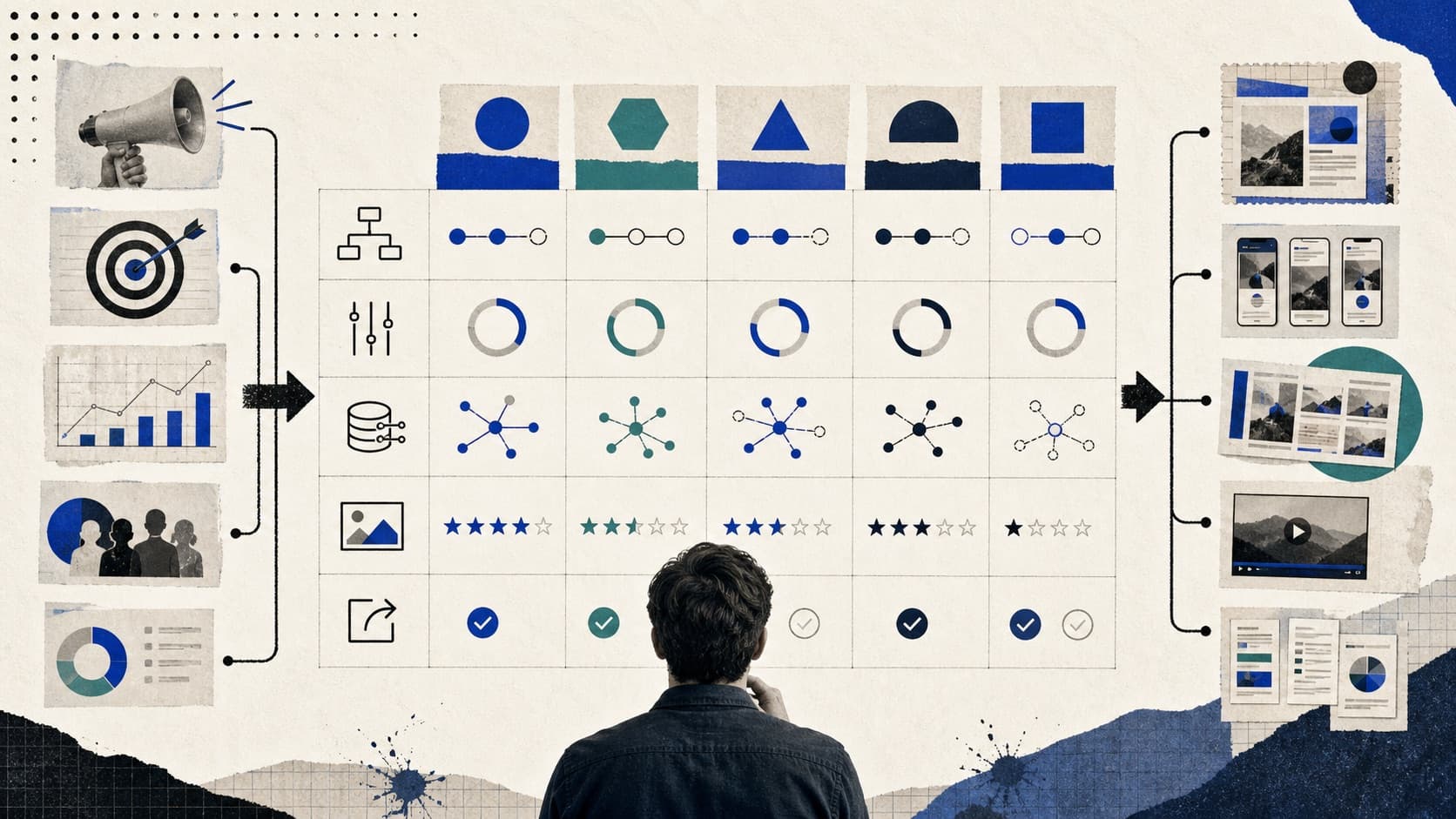
you are not buying generations. you are buying usable creatives per month, at a price.
everything below follows from that sentence, and almost every pricing page is designed to stop you thinking in those terms, because generations are the unit that flatters the vendor and usable creatives is the unit that decides whether you renew.
the person in the corpus who worked this out for themselves phrased it better than any analyst:
"whats your cost per USABLE creative"
and the two numbers that let you compute it:
"i throw away a lot, maybe 60%"
"Costing me around $20 in tools/credits to land one ad that actually works."
a 60% discard rate is not a scandal — it is normal, and it is the same reason the human route costs what it costs. the difference is that a freelancer's failures are absorbed before the invoice and a platform's failures are billed to you at full price. so a tool at a quarter of the price with three times the discard rate is not cheaper, and it will never feel more expensive, because the loss arrives as a slowly draining credit balance rather than a bill.
the benchmark most people are missing, stated as a question by somebody who has clearly been looking for it:
"We’ve been trying to benchmark our video creative budget and i genuinely can't tell if we're overpaying or if this is just what it costs now."
there is no published answer to that. you have to generate it yourself, which the trial protocol at the end of this piece is designed to do.
the criteria
one: what does a failure cost
ask the vendor directly: when a generation comes back unusable, am i billed for it? the answer is almost always yes, which is fine, but it means the pricing you were shown assumes a hit rate you have not measured.
the specific failure mode worth asking about is not the model producing something ugly. it is the layer above the model losing track of what you gave it:
"The agent tends to mix up references, i wasted probably about 3k + credits before i gave up and switched to manually pasting prompts in the studio"
note where that person ended up — doing it by hand, having paid for the automation. the automation layer is where the money goes and it is the part least covered by any demo.
"Without it, you're wasting time, wasting credits on the AI tools and software you're using and it's frustrating."
two: can you start from your own asset, and do you own the result
one person in the corpus wrote their entire requirements list in a single sentence, and it is a better spec than most procurement documents:
"What i need: upload my own image as a starting frame, rights i can use commercially, no watermark on the paid tier."
three separate criteria, all of them binary, all of them checkable in ten minutes:
can you supply the starting frame? this matters more than any quality benchmark. creative that begins from a photograph of the actual product avoids the most substantive objection people have to generated advertising — being shown a fabricated version of a thing that could simply have been photographed. a tool that only generates from text is a tool that can only make things that are not your product.
are the commercial rights unambiguous, in writing, for paid media? not "you may use outputs". specifically: paid advertising, at scale, in the territories you run in.
is the paid tier actually unwatermarked, at the resolution and aspect ratios your placements need? check the aspect ratios explicitly. a 16:9 export is useless for the placement most of your budget will go to.
three: does it hold state
this is the criterion that separates a generator from a workspace, and it is the one people discover they needed only after six months of not having it.
"how can i make sure i don't lose track of the sequence it came from so if i want to add or make some changes it would be easier?"
the same problem, described from the other side by somebody managing human creators:
"But from the hiring side of the table, it made creators surprisingly hard to compare, and when we wanted to go back and find someone a week later, they were impossible to find on Google."
the shape is identical whether your creative comes from a model or a person: the asset is easy to keep and the context is easy to lose. the brief, the reference image, the prompt, the version that won, the reason it won. if those live in four places, then in three months you will be re-deriving something you already knew, at full price.
so the question to put to a platform is not "can i find my old generations". it is: can i find the brief that produced the one that worked, and make a variant of it without starting again?
four: how many tools does it remove
count before and after. the corpus is unusually consistent on this being the actual daily pain rather than output quality:
"Are you using one tool from start to finish, or mixing a few one for images, one for video, one for voiceover, one for editing?"
"just curious how many tabs do you guys usually have open when you're making a 30-second clip?"
"Are you still wiring together a five-tool stack"
"So what is the one tool you would recommend to someone who wants the simplest possible setup?"
a platform that does one step brilliantly and forces four exports is often a net loss, because every handoff is where references get lost, versions diverge and the record breaks. the honest test is whether your tab count goes down after you adopt it. frequently it goes up, and the subscription is added to the stack rather than replacing anything in it.
"Most people are wasting money on AI tools they don't actually need."
five: does it fit your volume band
tools in this category are built for a spend level, and they are rarely explicit about which one. the tell, from somebody who tried one and bounced:
"felt like a tool built for brands doing 50k+/mo."
there are two failure directions here. a tool built for enterprise volume buries a small advertiser in workflow they do not need — approvals, seats, brand governance — and prices in that machinery. a tool built for a solo operator falls over the first time you need forty assets reviewed by two people before friday.
the constraint that made this whole category exist is worth having in mind when you judge fit, from an agency describing their old process:
"we could only ship four creative variants a month because every test needed a new shoot, talent booking, and edit cycle."
four a month is the problem being solved. if a platform does not visibly change your number, it is not solving your problem, however good the individual outputs look.
and the transition to watch for, because it changes which tool is right:
"At what point did you stop worrying about budget and start worrying about whether your team could physically produce enough good creative to keep up?"
six: how much finishing does the output need
a demo shows you the best result out of some unknown number of attempts. the number you want is how much work sits between the output and something you would run.
"Have you found a tool that makes real estate videos look professional right away, or does everything still need heavy editing afterward?"
this is where a lot of "cheap" tools recover their margin at your expense. an output that needs twenty minutes of editing is not a $2 asset, it is a $2 asset plus twenty minutes, and twenty minutes is the most expensive input you have.
seven: does it help you decide, or only produce
almost every platform in this category is a production tool wearing a strategy tool's clothes. production is the easy half. the question people actually have is downstream:
"Also what tools are you using to make/test creatives and what metrics do you pay the most attention to before deciding whether to kill an ad or keep pushing it?"
be sceptical of anything that claims to answer that. the corpus is unambiguous that judgement is where these systems underdeliver, and a confident recommendation engine that is wrong is worse than no recommendation engine. what is reasonable to ask for is plumbing: does it let you tag an asset with the concept it came from, so that when you look at results you can group by argument rather than by filename?
eight: the free tier
"free" is a keyword with a lot of search volume behind it and a lot of disappointment behind that. the question people are really asking:
"Which App / Tool offers a REAL first free try?"
a free tier is a marketing instrument, so read it as one. the four things routinely withheld are worth checking every time, because withholding any of them makes the free tier useless as an evaluation:
- commercial rights. many free tiers are explicitly non-commercial, which means you cannot evaluate the thing you would actually do with it.
- watermarks and resolution. you cannot judge whether output is runnable if you are not allowed to see runnable output.
- the good model. free tiers frequently route to a cheaper, older model, so what you are evaluating is not what you would be buying.
- queue priority. a workflow that is pleasant at thirty seconds a generation is a different workflow at six minutes.
none of that makes free tiers useless. it makes them useful for one specific question — does this interface fit the way i work — and useless for the question people try to answer with them, which is is the output good enough to run.
nine: can you leave
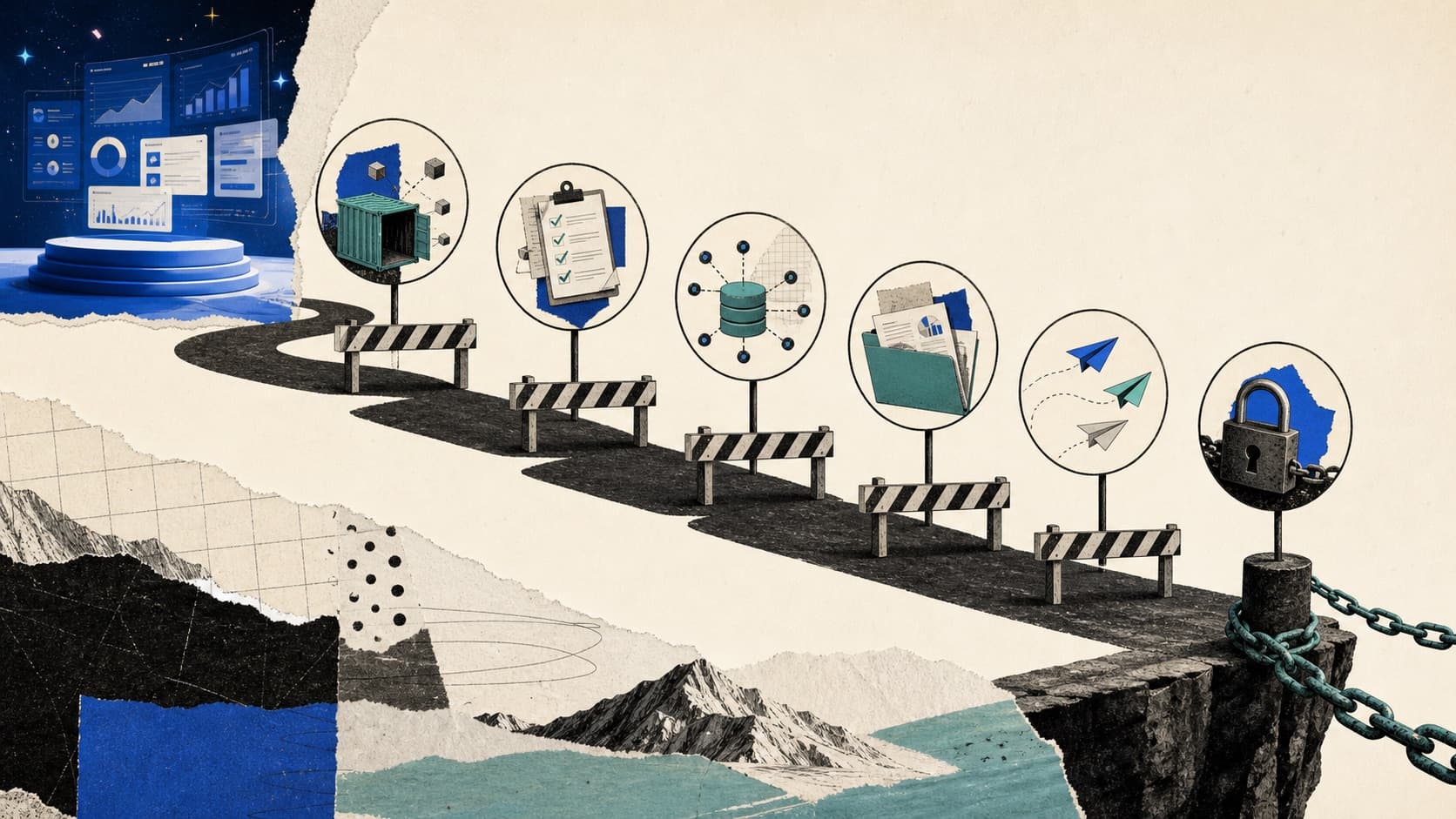
boring, decisive, and never asked until it is too late. can you export your assets, in full resolution, in bulk, along with whatever metadata the platform holds about them? given twenty launch a day and a fair number die, assume you will be leaving and check the exit before you check the features.
a trial protocol you can run in an afternoon
criteria are only worth having if they produce a number. this is the smallest test that gives you one.
- pick one real brief you actually need — a specific product, a specific audience, a specific claim. not a demo prompt.
- produce ten attempts at it, on each tool you are seriously considering.
- count how many you would genuinely run. that is your hit rate.
- divide the cost of the ten attempts by that count. that is your cost per usable creative, and it is the only number that compares tools honestly.
- time the finishing work on one of the usable ones and add it at whatever you value your hour at.
- finally, close the tab, come back the next morning, and try to answer: which prompt and which reference produced number seven? if you cannot, the platform does not hold state, whatever the feature list says.
that is a two-hour exercise that will tell you more than a month of trials run without a protocol, because it forces the discard rate into the open.
what no platform will do for you
worth naming, because a lot of money gets spent hoping otherwise.
it will not tell you what is wrong with your account. the most common expensive mistake in paid social is treating a delivery problem as a creative problem — pouring variants into an account that cannot get enough conversions to optimise on, which splits the same data further and makes everything worse.
"Is it usually the creative, the offer, the audience, the landing flow, or something else?"
"Doubling your ad budget is the most expensive way to fix the wrong thing"
it will not give your creatives a fair test. that is a function of your budget and your structure, not your tooling:
"$46/day split across 6 ads means each creative barely gets enough data to optimize."
buying the ability to make sixty assets a month when you can only honestly evaluate six is a common and expensive category error.
and it will not supply judgement. somebody listing the skills that still matter put it exactly:
"Fifth, being able to assess when the machine is generating garbage, which is quite often when it comes to AI generated creatives."
the summary
- buy usable creatives per month, not generations. every pricing page is built to stop you measuring it that way.
- find out what a failure costs, and assume a discard rate around half until you have measured your own.
- three binary checks: can you start from your own image, are the commercial rights explicit, is the paid tier genuinely unwatermarked at your aspect ratios.
- state beats output quality over a year. the asset is easy to keep; the brief, the reference and the reason it won are what you lose.
- count your tabs before and after. a tool that adds a step is a net loss even if the step is good.
- check the volume band it was built for, in both directions.
- treat free tiers as interface tests, not quality tests — the good model, the rights and the watermark are usually exactly what is withheld.
- run the ten-attempt protocol before you subscribe. it takes an afternoon and produces the only number that compares tools honestly.
- and do not buy judgement. it is the one thing in this category that is still reliably oversold.